Head-first versus feet-first is a coaching choice, not a bravery ranking. Same height. Same cord matched to your weight. Different exit, different view, different chance you freeze on the lip.
Big commercial crews often coach a committed dive — “like you’re going into a pool” — because ankle-tied systems load cleaner when you leave in a line instead of a hesitant hop.[1] Feet-first is still fine when staff say it is. Fighting the brief to look cool is how people collect messy swings and sore joints.[2]
Here’s what actually changes.
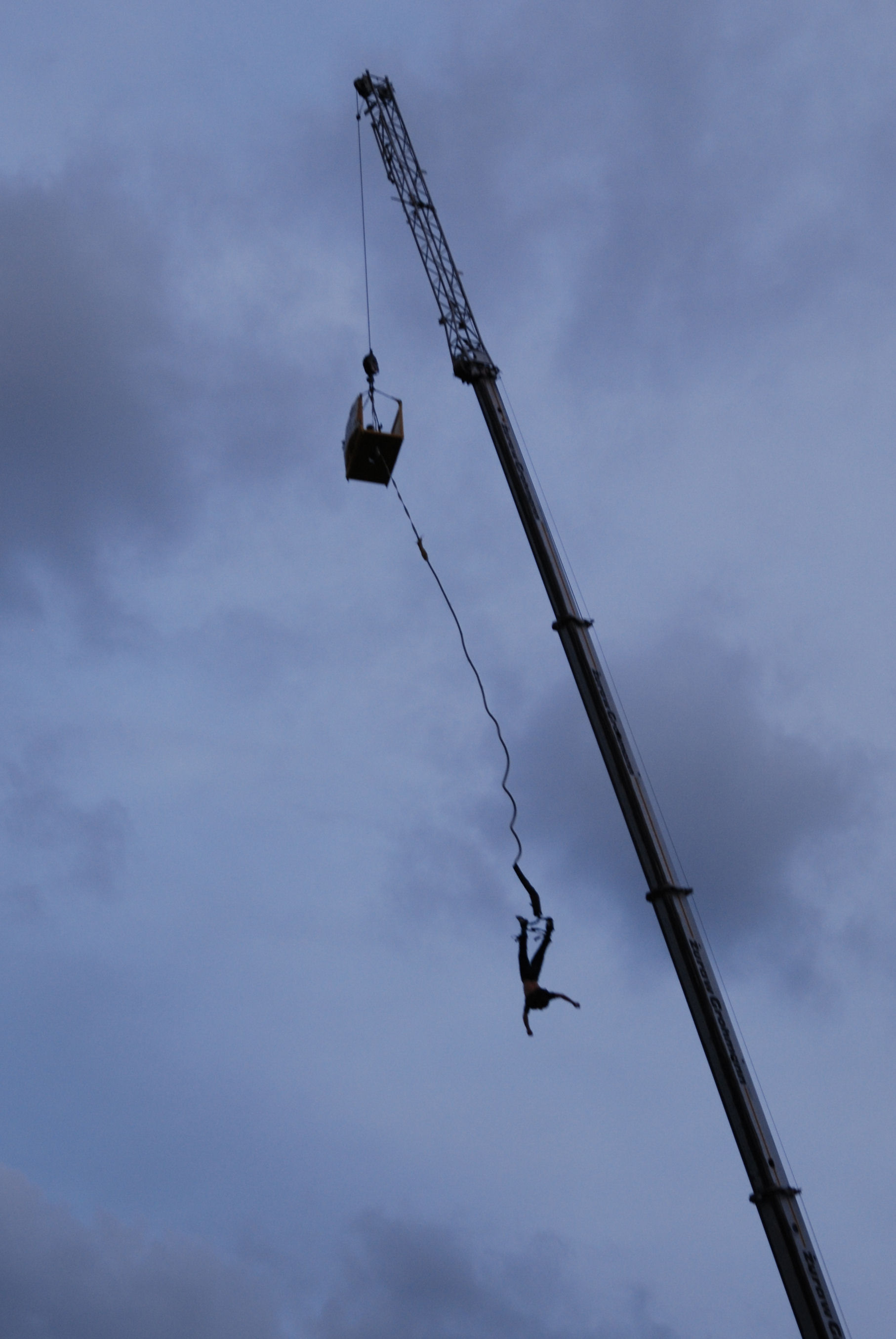
What feels different in freefall
Feet-first can feel like stepping off a curb that never arrives. Your eyes can stay on the horizon longer. The drop is still the drop, but you’re not staring straight into it as soon.
Head-first puts the ground in your central vision sooner. The same freefall can feel faster and more visual even when the clock is identical. On long bridges that matters more than on a short crane jump.[3]
At the catch, the cord still does the physics. Twisted exits, stiff necks, and last-second camera waves matter more than the label on the dive.[2]
What the harness and crew care about
Operators pick cord and attachment around weight, product type, and gear layout — not your photo plan.[4] Ankle wraps and body harnesses get different coaching. Some high sites even talk you through a foot-release after a bounce so you can sit upright for the rest of the ride; that is their system, not freestyle.[5]
Listen to the jump master at that station. If they want arms out and chest forward, do that. If they want a simple step, do that. You do not get bonus points for inventing a third style mid-count.
Which one to pick on jump one
Pick feet-first if diving makes your shoulders lock, if staff offer it as the simple option, or if you just want the edge decision without a gymnastic layer.
Pick a coached dive if the crew is teaching it, the harness allows it, and you can leave on their count without twisting toward friends. Jump two is a fine time to upgrade style once you already trust the process.[1]
Either way: no last-second twist for the camera. Media packages look better with a clean line than with a flail.
Bottom line: match the exit the crew coaches, pick the orientation you can actually leave with, and save hero poses for after the system is already working. Everything else is optional.
Sources
- AJ Hackett Bungy NZ: Top tips (headfirst dive coaching)
- AJ Hackett Bungy NZ: Risk disclosure (technique and forces)
- Face Adrenalin Bloukrans: high bridge bungy product
- XINSURANCE: Bungee risks and mitigation
- AJ Hackett: Choosing Nevis Bungy vs Swing vs Catapult
Image credits
- Photo: Lilly M / Wikimedia Commons (CC BY-SA 3.0)
- Photo: Lilly M / Wikimedia Commons (CC BY-SA 3.0)