Those last seconds are not a mystery. They are a short checklist run by people who do this all day, while your body throws a normal stress response.
Hands shake. Mouth goes dry. Time feels wrong. That is adrenaline, not a personality review.[1]
Here is the sequence at a serious commercial site. Details differ by operator. The shape is the same.
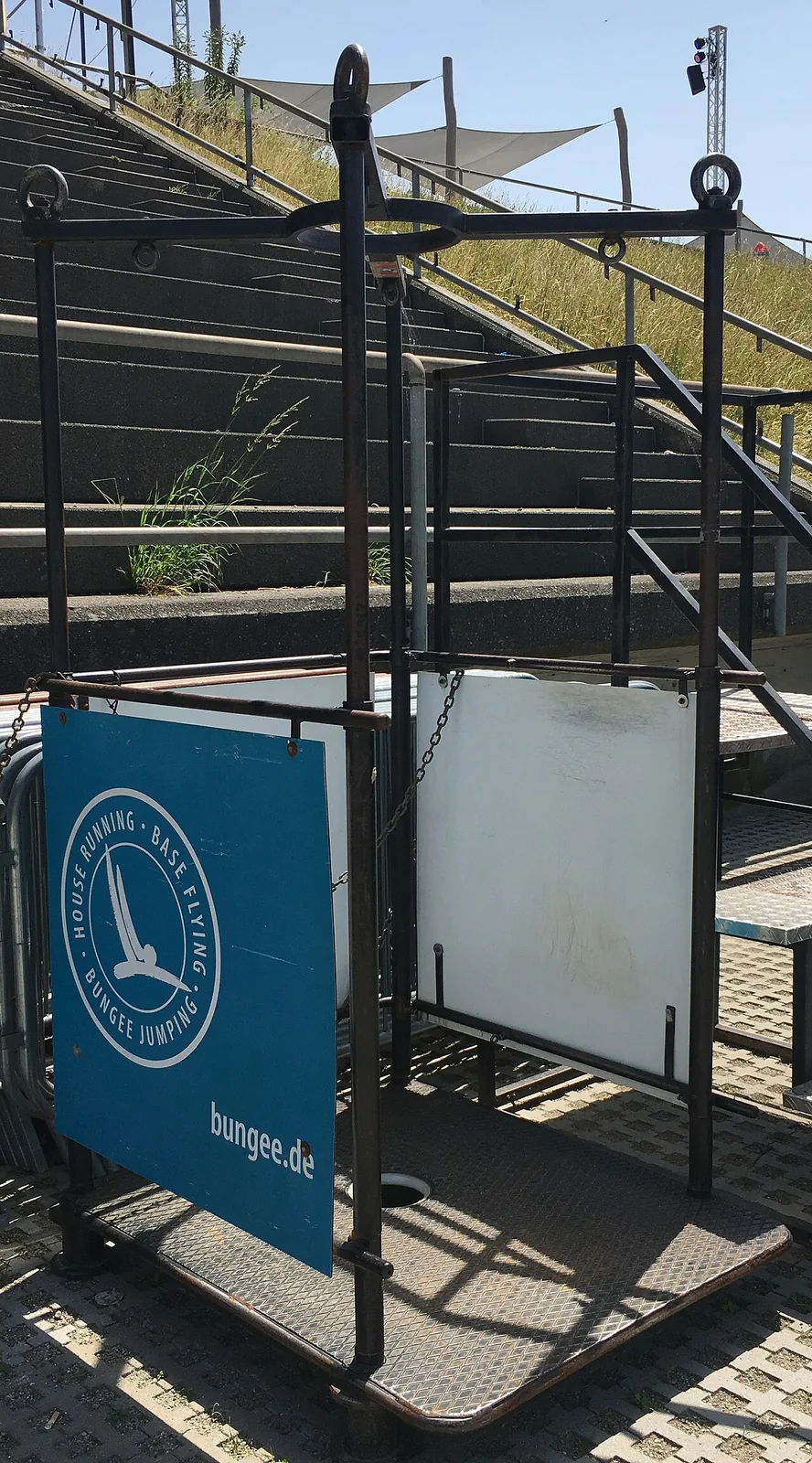
Final gear check
Before any countdown, crew recheck attachments. Harness fit. Connection points. Cord matched to your weight. Visual and verbal double-checks by more than one person is normal at established operations.[2]
You may get a tug on a strap, a bounce in place, a “hold still.” Keep your hands off the system after they finish. Fidgeting undoes their work and restarts doubt.
If the check looks rushed or sloppy because the line is long, that is a culture problem. Leave if it feels wrong. Another site exists.
On the platform
You move to the lip. Toes may hang over air. Instructions stay short on purpose: look ahead, arms out, jump big, don’t sit back. Working memory is trash under stress; long speeches make freeze more likely, not less.
Wind can make balance feel weird. Rain often still runs. Strong wind, lightning, and bad visibility are more likely to cancel or delay you.[3] Trust a weather hold. That is the job.
What your body is doing
Heart rate up. Muscles tense. Digestion offline. Pupils wide. Your brain is running a survival program designed for real threats.[1] Tremor does not mean you booked the wrong life. It means the sympathetic system is online.
Sounds may feel distant or too sharp. You might hear your own breathing more than the river. Fine. Follow the next short instruction. That is the whole game.
The social bit
Friends with phones make it worse for a lot of people. You are allowed to say no filming for a minute. Face the crew, not the gallery.
Staff humor is usually a tool to keep the platform from turning into a panic loop. If it feels like bullying, pause. Decent crews would rather unhook you than shove a bad jump.[3]
Countdown and leave
Countdowns vary: three, five, a brand phrase. The point is a shared go-signal so you do not invent your own. On the call, commit. A half-step that turns into a sit-back is how takeoffs get messy.
Decide your yes before you are clipped in and six people are watching. Until final commitment, you can still say stop out loud. After you leave the deck, the system does the physics.
If you freeze mid-count, a good crew restarts or walks you back. They do not push unless you asked for that help. Freezing is common. See what happens if you freeze.
Bottom line: last seconds = check, position, short cues, countdown, leave. Fear shows up. Process is what keeps it from making every decision.
Sources
- Harvard Health: Understanding the stress response
- AJ Hackett Bungy NZ: Is bungy jumping safe?
- AJ Hackett Bungy NZ: FAQs (weather, attachment, no push)
- Illinois Admin Code: Bungee jumping (final inspection / checklist)
Image credits
- Photo: Destron Commander (talk) / Wikimedia Commons (CC BY-SA 3.0)
- Photo: Pittigrilli / Wikimedia Commons (CC BY-SA 4.0)