Most commercial bungy runs in daylight. Night sessions exist at some sites and events, but they are not the default. Darkness does not change the physics. It changes what your eyes can use and how hard the crew works the checks.
If an operator does not clearly advertise night operations, do not assume they offer them.
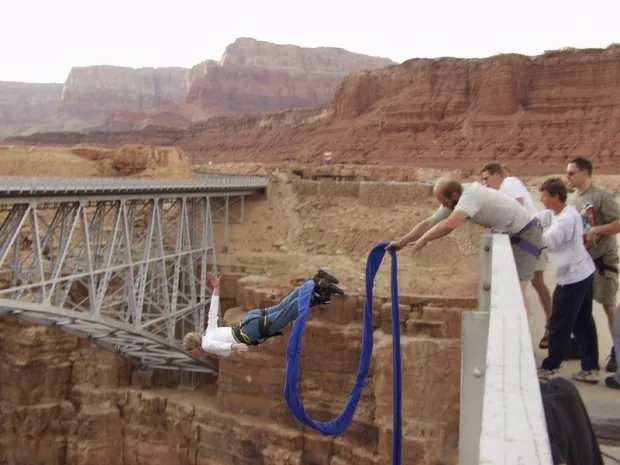
What darkness actually changes
In daylight you get constant depth cues — trees, water, buildings. At night those cues shrink. Many people feel more fear with less visual scale. Some feel less because they cannot see the full drop. Neither feeling is a safety upgrade.
Crew still need light for harness fit, cord choice, attachment checks, and retrieval. If the site looks dark and improvisational, leave. Serious commercial operators treat lighting and communication as part of the system, not mood lighting.[1][2]
When night might be worth it
You already jumped that product or a similar one in daylight. You want the novelty of city lights or a special session. The operator posts clear night hours, medical rules, and weather rules. You are not exhausted from a full day of tours and a late lunch beer.
Urban tower products can look striking after dark when the city grid is on. Natural gorge jumps often gain nothing but colder air and worse photos. Confirm the actual product page rather than a blog list from five years ago.[3]
When to skip night
First jump, ever. Heavy fatigue. Alcohol. A "secret after-hours" offer with no published process. Any medical issue that already makes daylight briefings hard to follow. Jumping because friends want a cooler video is a bad reason.
Standard exclusions still apply after sunset: weight bands, pregnancy bans, heart and back issues, and the right to stop before the countdown. Night does not waive those.[1][4]
Practical notes if you book
Arrive earlier than a day slot. Wear layers you can jump in. Ask how photos work under floodlights. Eat a normal meal, not a greasy experiment. Keep the audience small. Same blunt prep as any first-timer day: sleep, sober, decide your stop before you are clipped in. See mental prep.
Bottom line: Night is a special ops version of the same sport. Only book it with a transparent operator, enough rest, and no alcohol. First jump? Daylight is enough.
Sources
- AJ Hackett Kawarau: safety, medical, and process expectations
- AJ Hackett Bungy NZ: risk disclosure
- Macau Tower: AJ Hackett adventure products (urban high platform context)
- Shearwater: weather stops and participant requirements
- Harvard Health: understanding the stress response
Image credits
- Photo: Diego Delso / Wikimedia Commons (CC BY-SA 4.0)
- Photo: Don Graham from Redlands, CA, USA - God bless it! / Wikimedia Commons (CC BY-SA 2.0)