Search forums long enough and you will find people training for bungee like a triathlon - and other people assuming you must be a gymnast. Neither extreme matches how commercial operators actually clear jumpers. The real gatekeepers are weight ranges, medical exclusions, and the ability to follow instructions under stress, not your 5K time.[1][2]
What operators typically require
Weight bands exist because cord selection and free-stretch calculations depend on mass. Classic published examples include roughly 35 kg minimum and upper limits around 150 kg for some products, with site-specific caps when conditions change (for example, high river levels). Age minima vary by product intensity.[1][2]
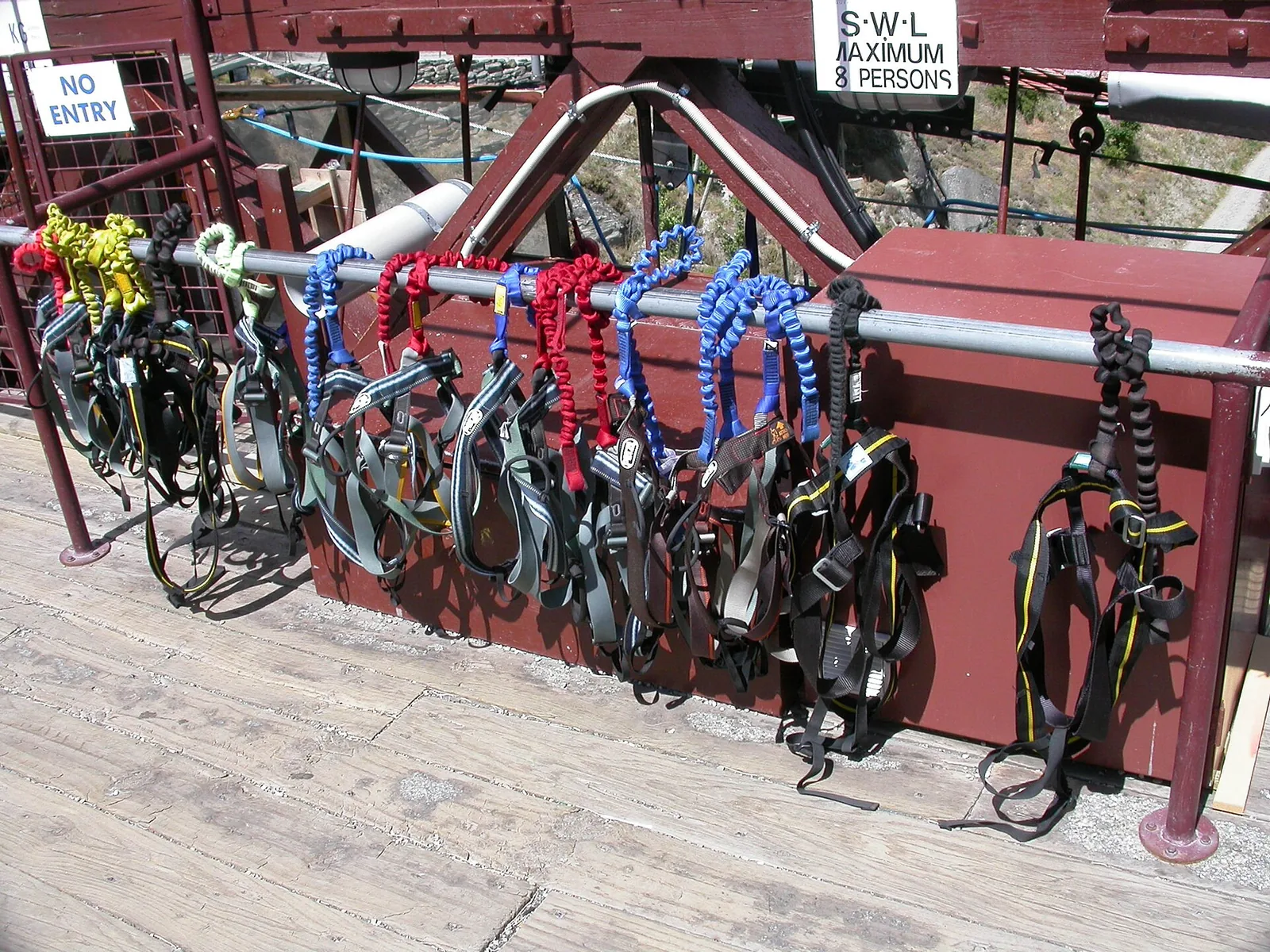
You will be weighed on site. Lying on a form helps no one. Pregnancy is commonly prohibited. Certain cardiovascular, neurological, musculoskeletal, and ocular conditions may mean a no-go or a doctor’s letter requirement. When in doubt, email the operator your situation before you book flights.
Fitness myths, cleared
Myth: You need powerful legs to “stick the landing.” Reality: Staff manage the jump line; you are not sticking a gymnastics dismount. Basic ability to stand, walk, and sit as instructed matters more.
Myth: Cardio fitness eliminates fear. Reality: Elite athletes still shake on the plank. Aerobic fitness supports general health and recovery from adrenaline, but it does not delete the fear response.[3][4]
Myth: Extra muscle makes you safer. Reality: Excess bulk only matters insofar as it changes weight and harness fit. There is no prize for max bench on a bungy deck.
Myth: If you are older, you are automatically unqualified. Reality: Many sites welcome older adults who pass the same screens; chronological age is not the only variable. Individual medical status rules.
Sensible prep that actually helps
Meet general adult activity guidelines if you can - regular moderate movement supports blood pressure, mood, and sleep, all of which influence how jump day feels.[3][4] Practice calm breathing. Do a light mobility routine so harness positions feel less alien. Maintain hydration and a normal eating pattern. If you have joint issues, ask how you will be connected (ankle vs. body harness variations) and what retrieval looks like.
Physical fitness requirements for bungee are mostly “fit the safety envelope and be medically appropriate,” not “become an action hero.” Train for health because health is good. Show up for bungy because you meet the specs and want the experience - not because you deadlifted the canyon.
Training week vs. medical reality checks
A light two-week prep can still be useful: daily walks, a couple of full-body strength sessions focusing on posture and grip comfort, and mobility for hips and thoracic spine so harness positions feel less alien. None of that replaces clearance for cardiac symptoms, uncontrolled hypertension, recent surgeries, or ocular issues some operators flag. If your health is complex, ask the site for their medical questionnaire in advance and review it with a clinician who knows you.
Body composition questions come up. There is no aesthetic ideal for bungy. There is only the scale the operator trusts and the harness sizes they stock. If you are near a limit, contact them honestly; some products have different bands than others at the same resort. Trying to cut weight aggressively in the final days can leave you dizzy and emotionally brittle - a bad platform combo.
Age-related fitness is about capacity and conditions, not birthdays alone. An active 60-year-old may be a better candidate than a sedentary 25-year-old with red-flag symptoms. Still, recovery from adrenaline can feel stronger as we age; plan a quieter evening and do not stack the jump with a mountain epic unless you know your recovery well.
Disability and adaptive questions deserve direct operator conversation. Some sites can accommodate certain mobility differences; others cannot without compromising evacuation procedures. The respectful approach is inquiry without assuming either automatic exclusion or automatic inclusion.
Bottom line myths to retire: you must be skinny, you must be young, you must be fearless, you must train like a stunt professional. Keep the real requirements: fit the published envelope, tell the truth on medical forms, and bring a body that can follow instructions when your brain is loud.
Whatever path you choose after reading a guide like this, keep the hierarchy of values straight: safety procedures, honest consent, and recovery time always outrank content, peer applause, and sunk-cost pride. BungeeFinder’s bias is simple - we want you to jump when it is right, walk away when it is not, and keep enough clarity afterward to tell the story without rewriting the fear into something it was not.
If you take one habit from the professionals who run platforms day after day, take their love of checklists. Check the operator, check your body, check your motives, check your gear rules, and check that the people with you will respect a last-minute no. That checklist is how extraordinary minutes stay good stories instead of cautionary ones.
Sources
- AJ Hackett Bungy NZ - weight and age FAQs (2025)
- Kawarau Bridge Bungy - published weight band example (2025)
- ACSM - physical activity guidelines overview (2024)
- CDC - physical activity basics for adults (2024)
Image credits
- Photo: Lorem Picsum / Unsplash photographers / picsum.photos (Unsplash License)
- Photo: sussexbirder / Wikimedia Commons (CC BY 2.0)