Standing on a bungee platform, orientation is a choice with feelings attached. Feet-first is the default many first-timers imagine: step, drop, scream, bounce. Head-first - a dive exit - is the postcard pose, arms out, world flipping into view. Both can be legitimate under a professional crew. What changes is not magic; it is vision, air load, rotation, and how confidently you leave the plank.[1][4]
Feet-first often feels like stepping off a high curb that never arrives. Your eyes may stay on the horizon longer; the void is still there, but the geometry can feel slightly less “into the mouth of the drop.” Head-first commits your gaze downward sooner and can make freefall feel faster and more visual, even when the physics of height and cord are the same site product.[2]
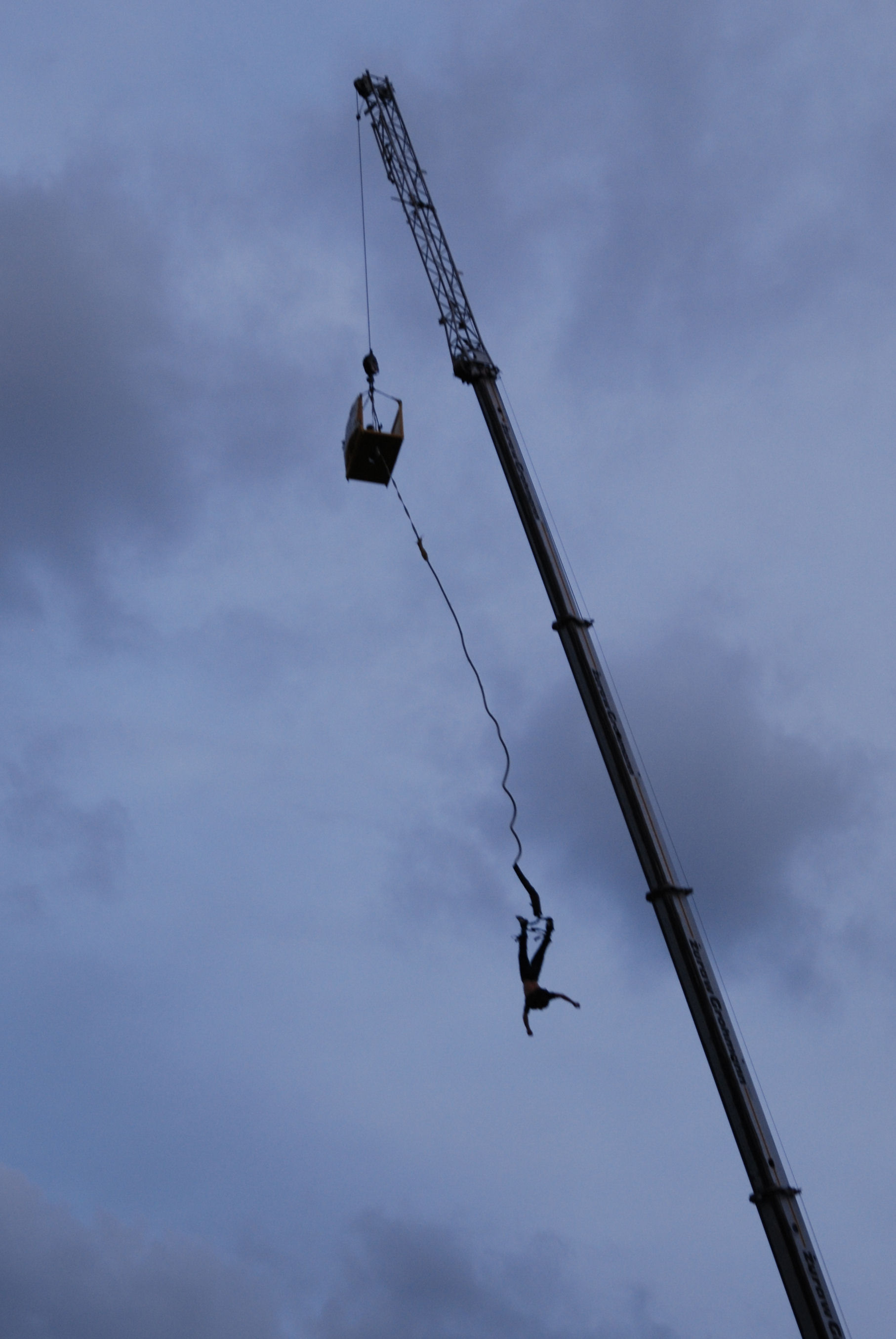
What the cord and harness care about
Operators design attachment and cord selection around weight, jump type, and equipment configuration - not around how cinematic your hands look. Ankle harnesses and body harnesses change what positions are coached. Listen to the jump master for the exit they want at that station; freestyle heroics that fight the briefing are how people collect awkward swings or strained joints.[1][3]
In freefall, head-first can increase the sense of speed because the ground enlarges in your central vision. Feet-first can feel more like a drop with the world sliding past your periphery. At catch, the cord’s elastic deceleration still rules; poor body tension or twisted exits matter more than the romantic label of the dive.[4]
Who should choose which
Choose feet-first if you want maximum simplicity, if this is jump one, or if diving makes your neck and shoulders brace in panic. Choose a coached dive if the crew offers it, you feel stable in the harness, and you want the visual drama - not because friends dared you mid-countdown. High bridges with long freefall windows make either style vivid; the site’s process still outranks the pose.[2]
Practice the exit on the platform only as staff allow - weight forward, eyes on the agreed target, no last-second twist to wave at cameras. Media packages are happier when you fly clean than when you flail for the lens.[1]
The honest takeaway
Head-first versus feet-first is a sensation and coaching choice inside a safety system, not a moral ranking of bravery. The impressive jump is the one where you heard the brief, matched the harness plan, and left the edge on purpose. Everything else is style - fun to explore on jump two, after trust with the cord is already real.[3][4]
Sources
- AJ Hackett Bungy NZ - jump styles and guest briefing culture (2026)
- Face Adrenalin - Bloukrans high bridge jump context (2026)
- XINSURANCE - body position and risk awareness (2023)
- Wikipedia - bungee jumping overview and techniques (2025)
Image credits
- Photo: Lilly M / Wikimedia Commons (CC BY-SA 3.0)
- Photo: Lilly M / Wikimedia Commons (CC BY-SA 3.0)