Skip to content

North American Bungee Jumping Options for Domestic Thrill-Seekers

Locations

North American bungee is a patchwork, not a single brand empire. Unlike New Zealand’s concentrated Queenstown scene, the United States and Canada spread freefall across seasonal bridge permits, private parks, festival cranes, and occasional high-profile canyon structures. That makes domestic planning both freer and fussier: you can often drive to a jump, but you must verify that this summer’s operator is still licensed for this summer’s deck.

Colorado’s Royal Gorge illustrates both the drama and the discontinuity. The Royal Gorge Bridge itself is a landmark - roughly 955 - 956 feet above the Arkansas River, long famous as one of America’s highest suspension bridges.[1][2] The structure has hosted bungee and special-event freefall configurations in its history, and bridge databases still note platform setups associated with past operations.[4] Whether a public commercial bungee is running in any given year is a separate question from whether the gorge looks terrifying from the planks. Domestic thrill-seekers learn to separate “iconic structure” from “bookable product.”

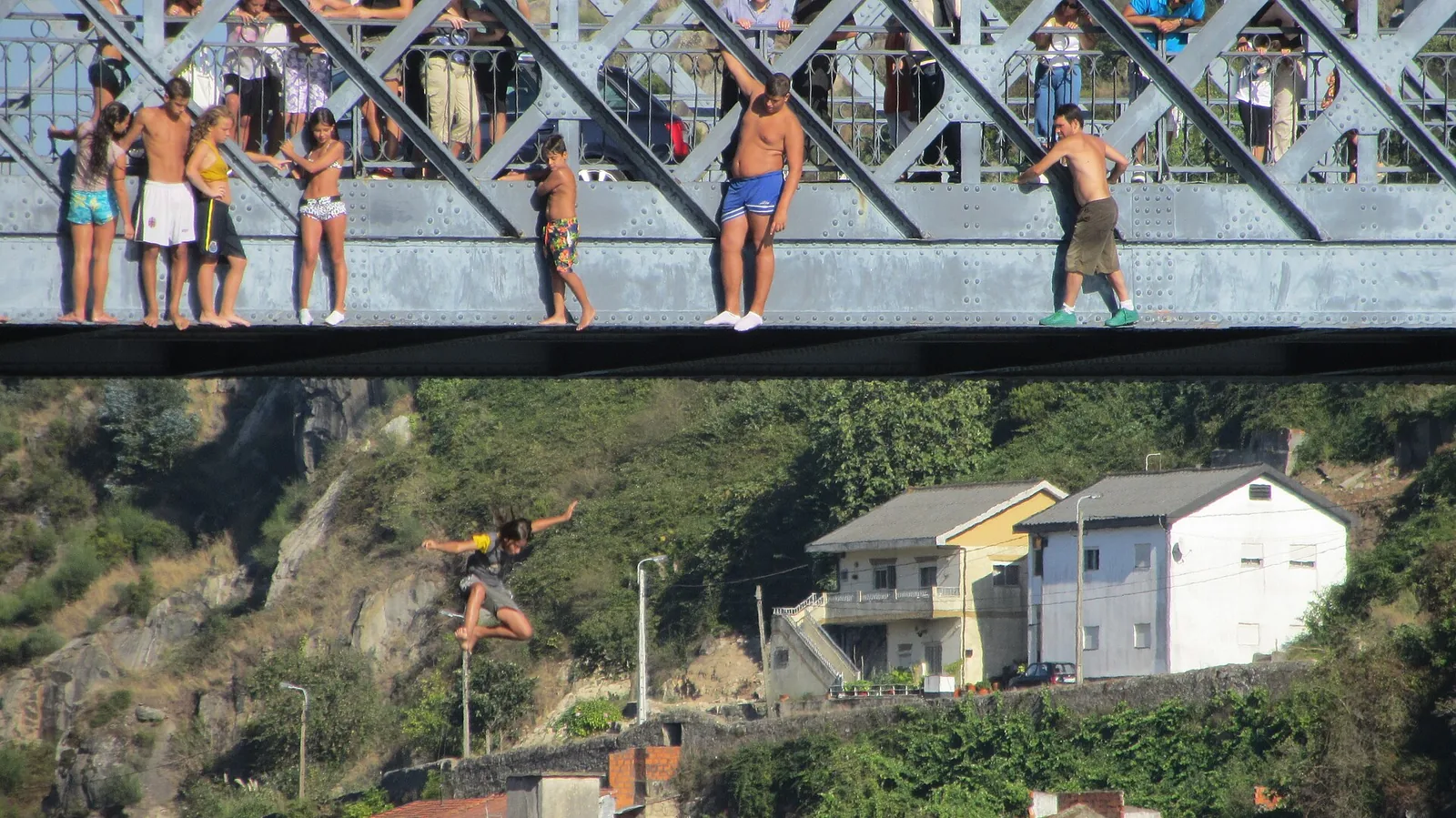
Kid jumping into river off of bridge Porto Portugal photograph
Photo: Brian Johnson & Dane Kantner / Wikimedia Commons (CC BY-SA 2.0)

Elsewhere, North American options tend to cluster around tourism regions and temporary installations. Bridge jumps, reverse bungee rides, and crane-mounted cords appear at fairs and adventure parks; permanent sites open, rebrand, and sometimes close after insurance or municipal reviews. Canadian adventure hubs periodically list bungee among multi-activity catalogs that also include rafting and zip lines. The practical takeaway is research hygiene: call the operator, ask who regulates them, confirm cord and harness standards, and read recent independent reviews that mention the briefing - not only the selfie.

Regulation is uneven across jurisdictions, which is why transparent operators matter. Some U.S. states publish detailed amusement and bungee rules. Massachusetts, for example, codifies bungee requirements that include medical-condition responsibility, posted age and weight limits (with a stated maximum not exceeding 275 pounds in the cited regulation), and a clear ban on visibly intoxicated jumpers.[3] Even if you jump in another state, that style of rulebook is a quality signal: look for posted medical exclusions, weight bands, dual connection systems, and staff who will refuse a guest who smells like last night’s bar.

For first-time domestic jumpers, logistics can be the competitive advantage. You can sleep in your own bed, drive with a sober friend, and avoid jet lag masquerading as courage. Pack closed-toe shoes if required, leave loose jewelry at home, and treat the waiver as a medical questionnaire rather than a formality. If you have heart, spine, eye, or neurological history, talk to a clinician before you book - North American operators will almost always put those conditions on the exclusion list anyway.

If you want height bragging rights without leaving the continent, prioritize sites with multi-year operating histories and clear public safety language over viral one-weekend crane events. If you want a soft introduction, a lower bridge or tandem-capable operator can teach you the harness dance before you chase canyon folklore. And if your dream deck is not currently operating, do not invent a DIY alternative. Illegal or unpermitted jumps are how sports lose bridges forever.

North American bungee rewards the prepared local more than the impulsive tourist. The heights are real, the scenery can rival overseas classics, and the best days end with a road-trip meal and a story that did not require a passport stamp - only a verified operator and a clean decision at the edge.

Regional flavor matters. Western canyon country sells big geology and long drives; eastern and midwestern products more often appear as seasonal bridge or crane experiences tied to tourism towns and fairs; coastal hubs may emphasize multi-activity parks where freefall is one line among zips and swings. Canadian destinations frequently package bungee within broader outdoor catalogs aimed at both domestic long-weekend travelers and international visitors who already came for mountains or wine country. In every region, the same rule applies: call ahead the week you plan to jump. Websites lag; phones still work.

Road-trip logistics can be a safety tool. Designate a sober driver who is not jumping, or schedule the freefall early enough that fatigue does not drive you home. Mountain weather in Colorado or desert heat in the Southwest can turn a two-hour approach into a four-hour grind. Carry water, sun protection, and a paper backup of directions. If you are flying domestically to a jump, avoid stacking red-eye arrival and morning freefall; sleep debt mimics anxiety and impairs judgment in ways that look like fear but are really exhaustion.

Community and land ethics belong on the packing list too. Canyon overlooks and river gorges are not empty stages. Stay on authorized decks, obey park rules, and skip illegal bridge attempts that endanger first responders. Domestic thrill-seeking thrives when locals still trust the industry. Your best North American jump is the one that leaves the structure, the crew, and the landscape ready for the next car full of curious people who also decided a passport was optional.


Sources

  1. Royal Gorge Bridge - official site (2026)
  2. Wikipedia - Royal Gorge Bridge (2025)
  3. Massachusetts 520 CMR 5.13 - Bungee Jumping (2024)
  4. HighestBridges.com - Royal Gorge notes (2024)

Image credits