A standard bungee ends with you dangling above the void, bouncing until the energy drains. A water-touch jump aims lower - on purpose. Operators choose cord length and jumper weight so that at maximum stretch, hands, head, or body kiss the water of a river, lagoon, or pool before the rebound yanks you skyward again.[1] Done well, it is one of the most joyful tricks in commercial adventure: freefall, splash, laugh, bounce. Done poorly, water is not a soft landing - it is a hard, unforgiving surface at speed.
The setup is applied physics. Cords behave like elastic systems within limits; stretch depends on cord properties and load.[2] Operators weigh you carefully, select or adjust the system, and account for platform height and water level. Rivers rise and fall. Tides and seasonal flow change the target. That is why water-touch is not a casual “add splash” button - it is a calculation refreshed for conditions.
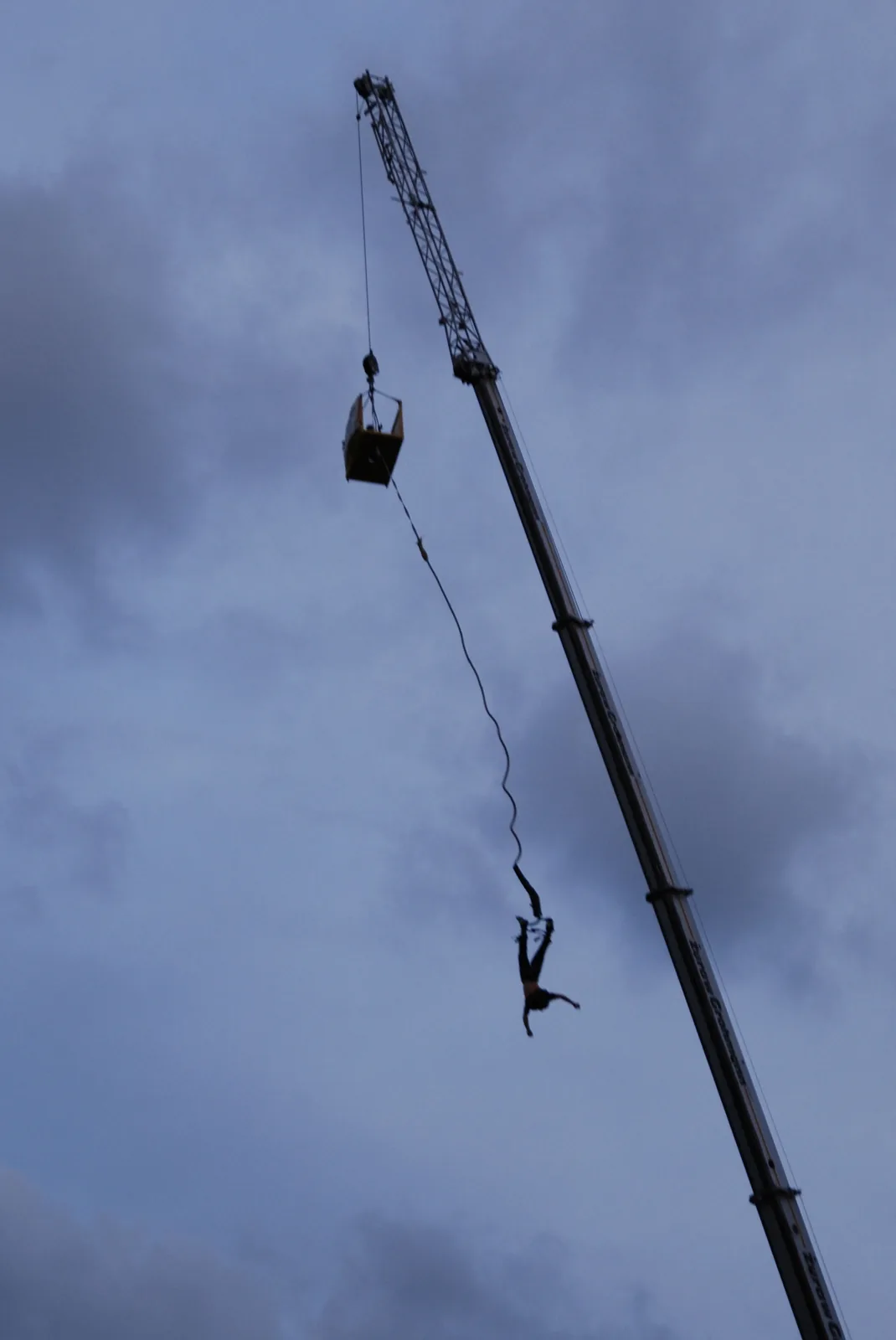
Technique from the jumper’s side is simpler than people fear. You still jump as instructed - often arms out or in a dive position depending on site rules. The goal is a clean exit so the cord loads evenly. At the bottom, if a head or hand dip is intended, staff may coach you to reach. Do not improvise wild spins hoping for a deeper dunk; uncontrolled motion can change orientation and increase injury risk on the rebound. Listen to the jump master. Their script exists because thousands of jumps taught them what works.[3]
Risks unique to water-touch include impact with water at residual speed, contact with submerged obstacles, cold-water shock, and entanglement scenarios that retrieval teams train for. Water that looks soft from the platform is dense. Face and neck protection through body position matters. Sites should clear the landing zone, monitor depth, and cancel when debris, boats, or flood conditions appear. If an operator shrugs at water level or skips weighing, do not jump.
Medical and gear notes: ear and sinus pressure can sting on a deep head dip; contact lenses and glasses need a plan; phones and cameras belong in staff-approved mounts, not loose pockets. Wear what the site specifies - often quick-dry clothes. Some locations offer optional water touch only above certain comfort levels or only with certain harness types. Ask before you pay if the dunk is guaranteed; many operators call it a “possible touch” because human variables and water level make promises slippery.
Compared with a dry jump, water-touch can feel more playful and less abstract. The splash is proof you went all the way. That psychological payoff is why quarry lagoons and river bridges market it so heavily. Still, the rebound after a touch can feel sharper because your attention is on water, not on bracing for the stretch. Expect the bounce. Keep limbs under control. Let staff retrieve you on their schedule.
Training your mind helps more than inventing technique. Watch a few jumps. Notice how little the successful jumpers flail. Breathe on the platform. Commit to the count. The cord and the calculator do the precision work; your job is a clean leap and trust.
Water-touch bungee is a brilliant marriage of engineering and showmanship when professionals run it. Treat it as a calibrated experience, not a pool party. Choose sites with clear weight procedures, visible water-safety practices, and honest talk about conditions. Then enjoy the rare moment when freefall ends not in empty air, but in a cold, bright slap of water - and the sky pulls you back up laughing.
Not every water-adjacent jump is a true water-touch product. Some sites simply jump over rivers with a large safety margin above the surface; others advertise a “kiss” or “dunk” as a calibrated outcome. Clarify which you are buying. Marketing language like “toward the water” is not the same as a planned touch. If the dunk is important to you, ask how often conditions allow it, whether weight precision is strict, and what happens if water levels rise overnight after rain upstream.
Clothing and aftercare deserve attention. Quick-dry fabrics beat heavy cotton that becomes a cold sagging weight. Secure nothing loose - keys, jewelry, cheap sunglasses. Some operators provide storage; use it. After a dunk, chill can set in fast even in warm climates when wind hits wet skin during retrieval. Bring a towel and warm layer in your bag. Ear water and sinus pressure usually settle; persistent pain or bloody discharge after a hard head dip warrants medical advice.
Environmental ethics apply. Do not demand a touch when operators close the option for debris, low depth, or wildlife concerns. Rivers are not theme-park plunge pools; they carry silt, branches, and sometimes boats. Respect exclusion zones for spectators. If you film, keep secondary people out of the landing line. The joy of a splash should never depend on someone else’s safety margin being ignored.
Skill-wise, first-timers can absolutely water-touch on a well-run site - no prior bungee resume required - because the cord math is the operator’s job. Your job is a committed exit and listening. Watch the person before you. Notice how little drama the successful dunks contain: clean leap, quiet bottom, bright splash, long laugh on the way up. That is the technique. Everything else is noise you can leave on the platform.
Sources
- Wikipedia - Bungee jumping (2024)
- Physics of bungee - educational overview (2024)
- AJ Hackett - jump experiences (2024)
Image credits
- Photo: Lilly M / Wikimedia Commons (CC BY-SA 3.0)
- Photo: Lilly M / Wikimedia Commons (CC BY-SA 3.0)