Breathing will not make you fearless. It can lower the volume so you can still follow instructions.
You still jump scared. You jump less scrambled.
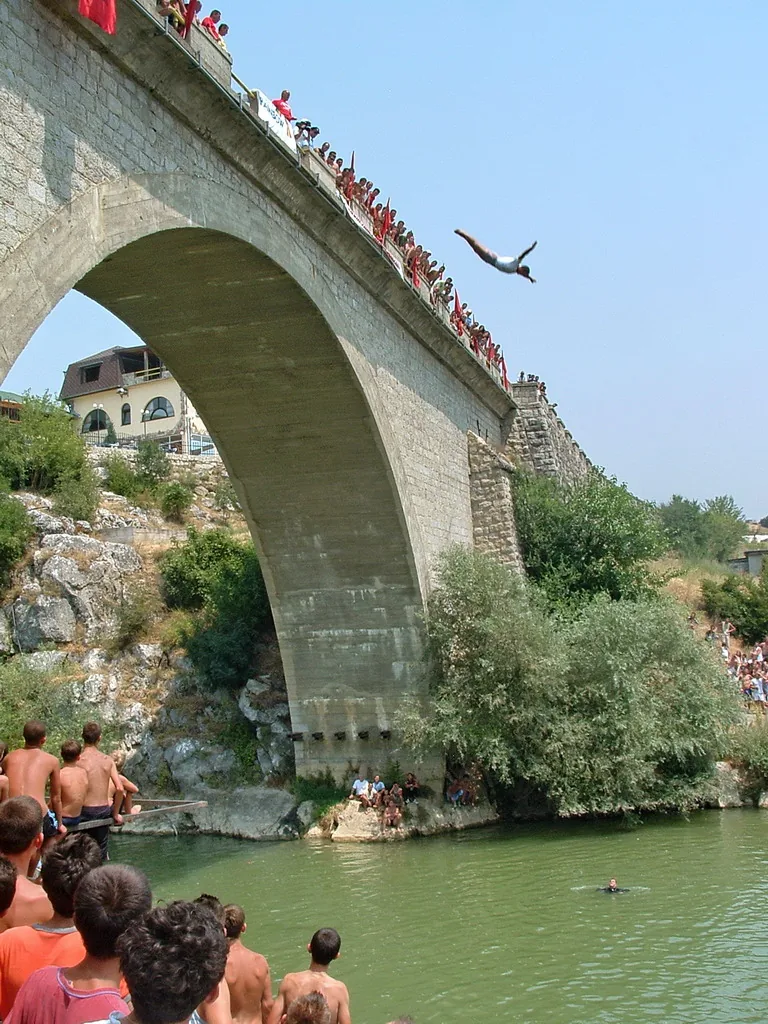
The only rule that matters
Longer exhale than inhale. That is it. Do that for a couple of minutes a day the week before so it is automatic on the walk to the platform.
Stress response speeds heart rate and breathing; you cannot “think” your way out of all of it, but breath is one lever you still have.[1]
Cyclic sighing (if you want a named method)
Two inhales through the nose (second one tops up), long exhale through the mouth. Research on short daily practice found cyclic sighing improved mood and reduced respiratory rate more than some other short breath protocols and mindfulness in that study design.[2][3]
Learn it on your couch. Do not debut a new technique at the lip of a bridge with a camera in your face.
Box breathing and friends
Equal counts in / hold / out / hold (often 4-4-4-4) is fine if you already use it. Same for slow nasal breathing. Pick one pattern. Synonym-cycling five apps is not prep.
If holding breath makes you more anxious, skip holds. Longer exhale without holds still works.
On the platform
Stand how they tell you. One or two quiet longer exhales. Look at the horizon if looking down makes you worse. Stop fiddling with straps after the check.
Do not close your eyes and disappear into a private ritual while the jumpmaster is talking. Listen. Breathe. Leave on their call.
If you freeze, say so. Breathing is support, not a substitute for consent. More: freezing on the edge.
What breathing will not fix
A bad operator. A medical exclusion you hid. Alcohol. A hype squad screaming your name. Book process and sleep first; breath second.[4]
Bottom line: practice longer exhales (or cyclic sighing) before jump day. Use it quietly at the edge. Fear stays. Scramble drops a notch.
Sources
- Harvard Health: Understanding the stress response
- Stanford Medicine: Cyclic sighing
- Balban et al. (2023): Brief structured respiration practices (PubMed)
- AJ Hackett Bungy NZ: Is bungy jumping safe?
Image credits
- Photo: Pittigrilli / Wikimedia Commons (CC BY-SA 4.0)
- Photo: Shkumbin Saneja / Wikimedia Commons (CC BY-SA 3.0)