Some people build courage by going down. Others build it by stepping off.
A first scuba experience — often Discover Scuba or a supervised resort intro — and a first bungee jump both demand trust in gear and staff. They diverge almost everywhere else: training load, environment, medical screening, and how long the fear lasts.[1][5]
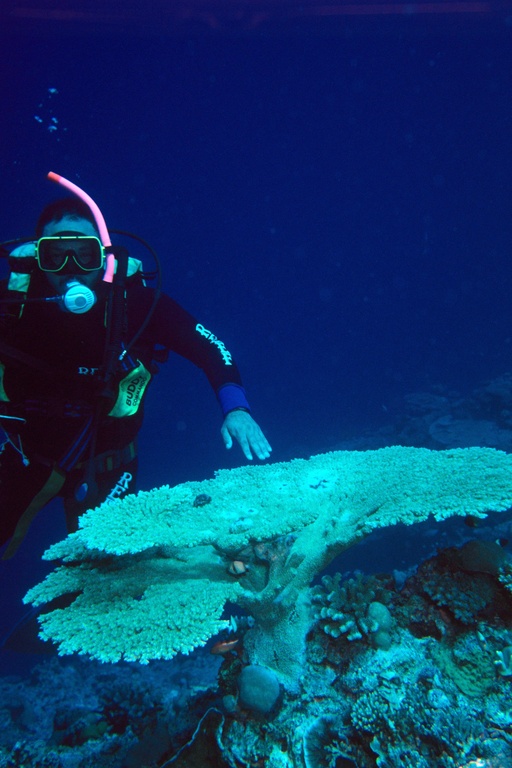
Environment: new habitat vs short freefall
Scuba replaces air with a regulator, sight with a mask, and silence with bubbles. The test is continuous: equalize, breathe, stay with your guide, manage buoyancy. You cannot “just stand up” the way you can on a dock.
Bungee replaces solid ground with corded freefall. The test is acute: step, fall, rebound, recover. One is a habitat shift. The other is a decision with a recovery team.[1][5]
Training load and time
Even an intro dive includes gear orientation, shallow practice, and hand signals. Full certification is multi-day education. Discover Scuba is still a real program with supervision limits — not a free swim with a tank.[1]
Bungee briefings are serious but short. You are joining a professional process for one leap, not learning a lifelong skill system. If you want progression charts and a hobby, scuba wins. If you want a single punctuation mark, bungee wins.[4]
Fear profiles
Diving brings mask anxiety, ear equalization trouble, and the odd panic of breathing underwater for the first time. Bungee brings edge fear, commitment freeze, and rebound surprise.
If you panic when you cannot easily leave an environment, water may be harder. If heights shut you down, platforms may be harder. Neither reaction is a moral failure — it is information for choosing and pacing.
Medical honesty in both worlds
Diving uses a formal medical questionnaire. Certain answers require a physician evaluation before you train or dive. Pregnancy is a do-not-dive situation on standard screening language. Lying on the form is how people get hurt — DAN and training systems push honesty for a reason.[2][3][6]
Bungee has its own exclusions and weight/age floors. Heart issues, pregnancy, recent injuries, and other conditions matter. Operators refuse people under the influence of alcohol or drugs. Tell the truth at check-in.[4]
How to pick for this trip
Pick scuba when you want calm competence under new rules — patience dressed as adventure. Pick bungee when you want to practice a short, loud yes on a deck with trained staff.
Some travelers do a first dive in the tropics and a first bungee in a mountain town the same year. That is fine. Stacking both in 48 hours when you are motion-sensitive or exhausted is a bad plan.
Bottom line: scuba = continuous skill underwater. Bungee = acute decision in air. Hire professionals, answer medical questions honestly, and pick the classroom that matches the fear you are ready for.
Sources
- PADI: Discover Scuba Diving course overview
- PADI: diver medical forms and paperwork
- Divers Alert Network: honesty and the dive medical form
- AJ Hackett Bungy NZ: FAQs (medical readiness, sober policy)
- AJ Hackett Bungy NZ: Kawarau Bridge Bungy
- UHMS: recreational diving medical screening system overview
Image credits
- Photo: Derek Keats / Wikimedia Commons (CC BY 2.0)
- Photo: Derek Keats / Wikimedia Commons (CC BY 2.0)