You do not have to make freefall your first hard conversation with height.
Gateway adventures shrink the unknown: harness trust, looking down on purpose, noise, coaching, waiting your turn. Jump day still scares people. It just stops being the first time every piece of the day is new.[2][5]
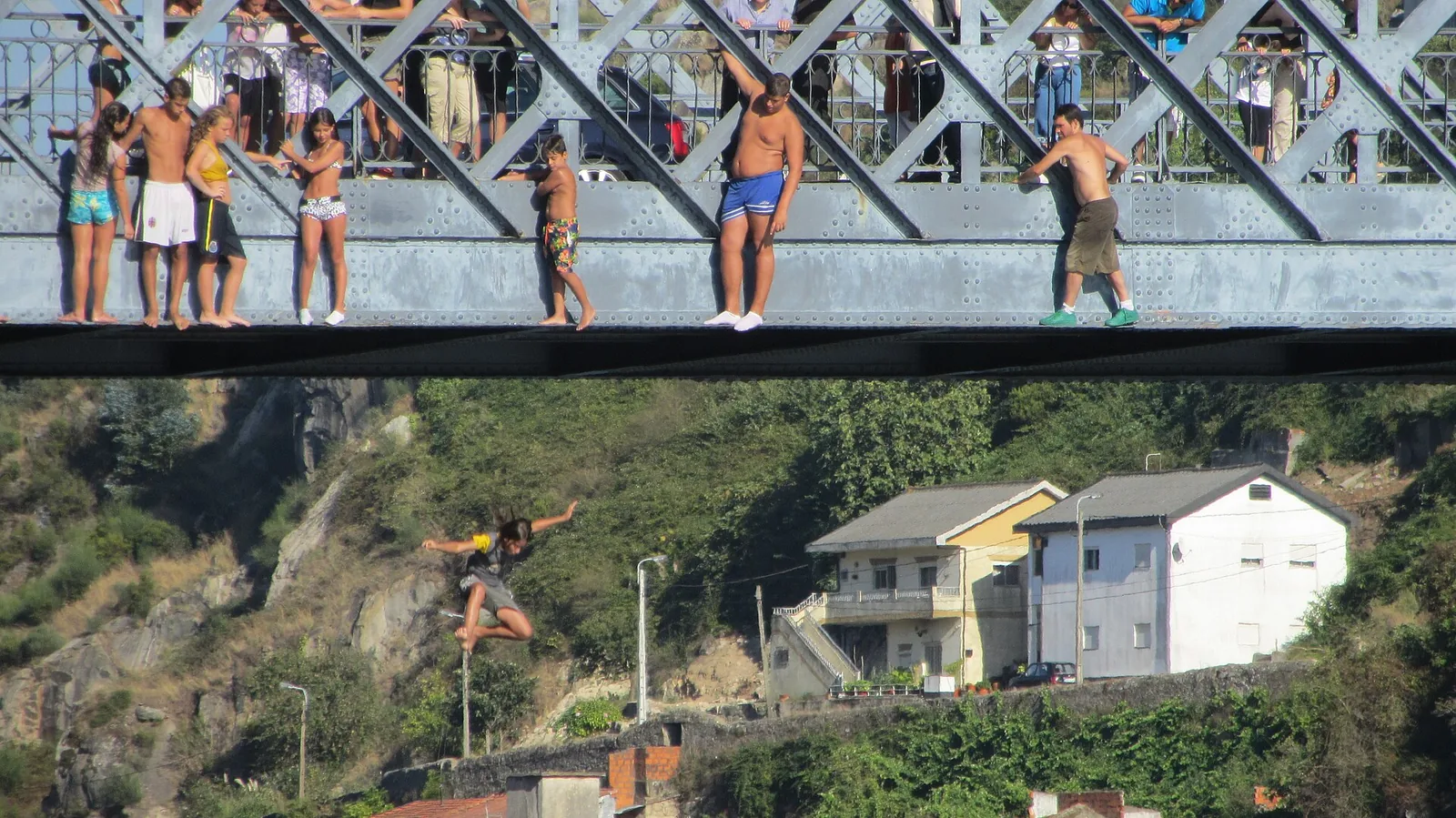
High walks and transparent bridges
Canyon walkways, glass floors, and suspension bridges teach you that depth can be viewed without catastrophe. Go when crowds are lighter if strangers spike your nerves. Look down for short intervals, then look to the horizon. You are practicing paced exposure, not recklessness.
Indoor skydiving and bounce sports
Wind tunnels give coached body flight without an aircraft or a cord. Trampoline parks and supervised freefall-style rides teach orientation and laughing while slightly out of control. None of that equals bungee physics. It equals novelty under supervision.[3]
Gorge swings and reverse launches
Where a reputable operator offers a swing or reverse launch, you get harness culture and a big air moment with a different force profile. A swing is not a bungy — drop and pendulum arc, no elastic bounce — but the check-in, briefing, and crew culture can feel related.[1]
Ask the same quality questions you would ask for bungee: weight limits, cancel rules, how checks work. Cheap mystery rides that treat kit like carnival junk are not “prep.” They are a separate risk.
Climbing gyms and easy via ferrata
Indoor climbing builds trust in belay systems and the habit of listening to a partner. Easy guided via ferrata adds real exposure with continuous protection and standards-driven kit culture.[4] Good for people who fear the void more than the decision to step.
Soft height that still counts
Tower decks, observation platforms, ferris wheels, and calm balloon flights are not silly. They calibrate height without demanding a leap. Pair them with sleep and a boring honest reason for wanting the bungee — “I want the story” beats “my friends will mock me.”
A simple ramp (if you have weeks)
- Week one: high walk or tower deck.
- Week two: climb session or indoor skydiving.
- Week three: watch real video of your jump site and write three questions for staff.
- Week four: early nights, normal food, and a booking you chose — not one you were cornered into.[2]
If you only have three days in town, skip the fake training montage. Book a solid operator, sleep, keep the audience small, and decide your stop before you are clipped in. Gateways help. They are not a moral requirement.
Bottom line: use smaller supervised height and harness days if freefall feels like too big a first step. Arrive having practiced trust in easier rooms. Let the cord be the exam you chose.
Sources
- AJ Hackett Bungy NZ: FAQs (swings vs bungy, readiness)
- AJ Hackett Bungy NZ: how to prepare for a bungy activity
- iFLY: what indoor skydiving is
- UIAA: via ferrata and climbing safety standards hub
- Harvard Health: understanding the stress response
Image credits
- Photo: Dariusz Jemielniak / Wikimedia Commons (CC BY-SA 4.0)
- Photo: Brian Johnson & Dane Kantner / Wikimedia Commons (CC BY-SA 2.0)