Bungee and BASE share "fall off something high." That is about where the similarity ends.
Bungee jumping vs BASE jumping is a commercial elastic cord under staff control versus a parachute jump from a fixed object (building, antenna, span, earth) that you mostly plan and fly yourself. One is a paid ticket with weight limits and a recovery system. The other is a high-skill, high-consequence sport with a much harsher injury and fatality record in the literature.[1]
What each activity actually is
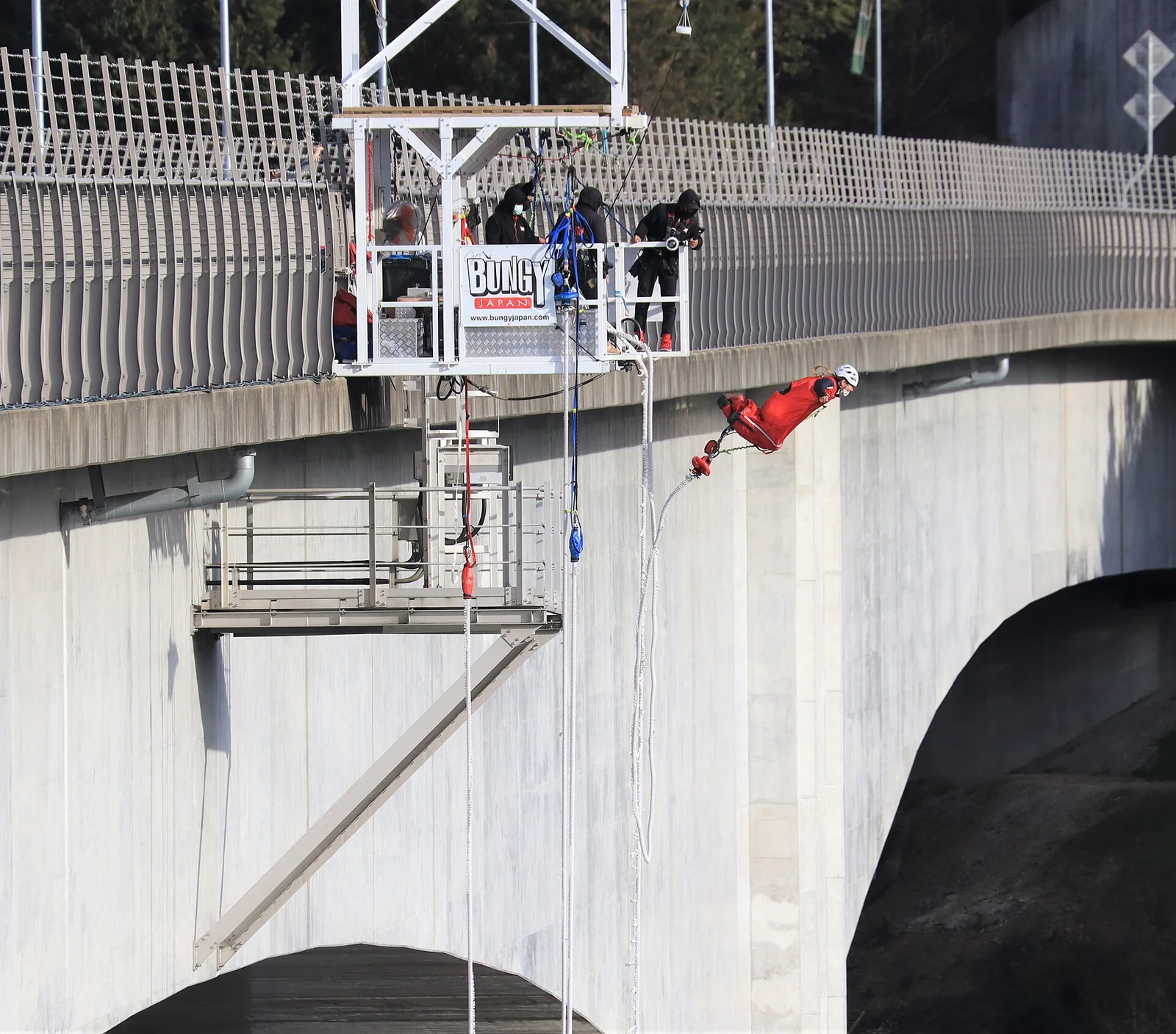
Commercial bungee: You are attached to an elastic system sized for your weight. Staff run checks, you fall, you bounce, they recover you. Sites may sit under adventure-activity audits or amusement codes depending on the country.[2][3]
BASE: You exit a fixed object with a parachute (and usually a lot of training). Low altitude, short time to deal with problems, hard objects nearby. It is not a tourist counter product in the same way.
Risk
A 2012 medical review of injury epidemiology in bungee, BASE, and skydiving noted sparse bungee data and estimated BASE any-injury risk around 0.4–0.5% — several times higher than skydiving in the comparisons they discuss. BASE also carries a long public fatality list maintained by the community; Wikipedia summarizes published fatality ratios that put BASE far above ordinary airplane parachuting.[1][4]
That does not make commercial bungee "risk-free." Process failures still kill people when attachments are skipped.[5] It does mean treating BASE as a different risk class from a ticketed bridge jump is honest.
Cost and accessibility
Bungee: Book online, show up, get briefed, jump the same day if you pass weight and medical screens. Price is a tourism activity fee. No multi-year wing-suit pipeline required.
BASE: Training, gear, legal access to objects, weather windows, and local culture. Illegal or grey exits are common outside designated sites. Cost is not just money — it is skill hours and residual risk you own.
Which one people mean when they say "extreme"
If you want a supervised freefall with elastic recovery, book bungee with a serious operator. If you want parachute flight from cliffs and towers, that is a different sport with different mentors. Do not use a tourist bungee as "BASE practice." The systems teach different habits.
Bottom line: bungee is a staffed elastic product; BASE is a parachute sport with a much steeper risk and skill curve. Pick with clear eyes.
Sources
- Søreide (2012): Epidemiology of injury in bungee, BASE, and skydiving (PubMed)
- WorkSafe NZ: Adventure activities safety audit resources
- AJ Hackett Bungy NZ: Safety procedures
- Wikipedia: BASE jumping (risk summary and fatality list references)
- BBC: Fatal process failure on a rope jump (attachment not made)
Image credits
- Hero image: site assets
- Photo: Alpsdake / Wikimedia Commons (CC0) — inline