A reputable bungee operator is one that can show you its process: published weight and medical limits, regular inspection and retirement of cords, a trained crew that checks every connection twice, and the willingness to stop for wind or refuse a jumper. Where a country regulates bungee jumping, the operator should also be registered or permitted, but a certificate is a starting point, not a guarantee. This guide explains what the rules in New Zealand and two US states actually require, which questions to ask, the warning signs that should make you walk away, and what the jump master and crew are doing while you wait.
Quick checklist before you pay
- Published limits. The operator lists minimum and maximum weights and ages for each jump, and a list of medical conditions to declare [1][2].
- Registration or a permit, where one exists. In New Zealand, check WorkSafe’s public register of adventure activity operators [3].
- A weigh-in on the day. Your weight decides which cord is used, so a site that takes your word for it is skipping a basic step [4].
- Every connection checked and double-checked by trained staff before you jump [1].
- Clear rules on alcohol and drugs. Jumpers who appear drunk or on drugs should be refused [4][5][1].
- A clear answer on weather, including the wind speed that stops jumping [4].
How bungee operators are regulated
There is no single international bungee standard that every site follows, so the protection you get depends on where you jump.
New Zealand
Commercial bungee jumping in New Zealand falls under the Health and Safety at Work (Adventure Activities) Regulations 2016. To register, an operator has to document a safety management system that meets WorkSafe’s safety audit standard, pass an audit and on-site field audit by a Recognised Safety Auditor, and then apply to WorkSafe, which can attach conditions to the registration [6]. The audit process takes at least eight weeks [6]. WorkSafe publishes a register of operators that have passed a safety audit and the activities they are authorised to provide [3].
The industry also has its own standard. AJ Hackett, which opened the world’s first commercial bungy site at Ohakune in March 1988 and the Kawarau Bridge site in Queenstown that November, presented the first draft of a Bungy Code of Practice in 1989 and introduced it in 1990 [7][2]. The code became the joint Australian and New Zealand standard AS/NZS 5848, and AJ Hackett says it is used as a guideline around the world [7][2]. AJ Hackett also says its cords and harnesses are inspected before every use and retired well ahead of manufacturer or regulatory limits [1].
United States
In the US, bungee jumping is usually regulated by states as an amusement device, and some states have detailed rules. Illinois is a good example of what thorough regulation looks like for jumps from crane-lifted platforms [4]:
- A licensed professional engineer’s report on the design must be submitted before construction, and an engineering evaluation is repeated every year and whenever a major component is modified.
- The jump master must visually inspect the whole cord before and during the day’s operations, at least four times a day, and record each check. A cord that suddenly behaves differently is taken out of service and destroyed.
- Every cord, harness and piece of rigging carries its own ID number and is logged, and the jump master records how many times each cord has been used.
- Cords are withdrawn when they reach the manufacturer’s jump life, and earlier if they have had more than 250 hours of daylight exposure without a cover, are more than six months old, have more than 5% broken threads or show other wear. Withdrawn cords are cut into pieces no longer than 5 feet so they can’t be reused.
- Carabiners must be screw-gate types with a breaking load of at least 4,400 lb, and jumping stops immediately if a sub-standard item can’t be replaced.
- The operating team must have at least four people, the jump master and crane operator must be at least 21, and the jump master must hold current first aid and CPR qualifications.
- The operating manual must state the maximum wind speed for jumping, and a serious injury must be reported within an hour, with the site closed until the state allows it to reopen.
Illinois also requires jumpers to be at least 18 with photo ID, and bans tandem jumps, catapult or reverse jumps, stunt jumping and “sandbagging” (holding an object or another person to stretch the cord further, then letting go) [4]. Virginia requires at least a site manager, a jump master and a ground operator to be present whenever jumping is under way, and its daily operating procedures follow the ASTM F770 standard [8].
Everywhere else
Rules elsewhere range from national adventure-tourism schemes to almost nothing. Where you can’t find any regulation, the operator’s own published procedures and what you can see on the day are your best evidence.
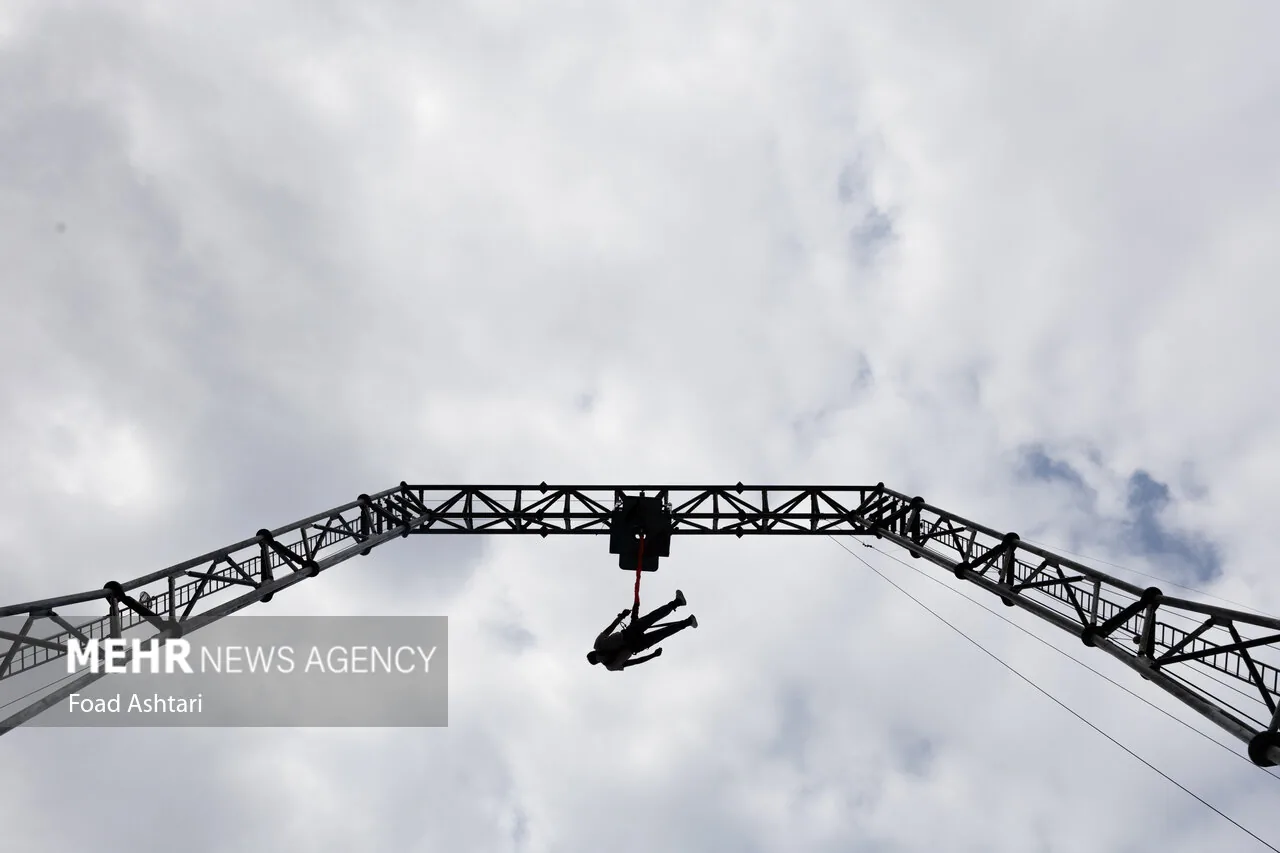
Questions to ask the operator
A good operator should be able to answer these clearly:
- How do you match the cord to my weight, and do you weigh everyone on site?
- How often are cords inspected, and when are they retired?
- Who checks my connections before I jump?
- What wind speed or weather stops jumping, and what happens to my booking if you close?
- Are you registered, licensed or audited, and by whom?
Specific answers, such as a cord retirement rule or a wind limit, are a good sign. “Don’t worry about it” is not.
Red flags: when to walk away
- No weigh-in, or staff who accept a guessed weight. Cord choice depends on it [4].
- Nobody asks about your health. Established operators ask about conditions such as blood pressure problems, heart conditions, epilepsy, pregnancy and recent injuries [2][4][5].
- Staff who seem drunk, distracted or rushed, or a site that lets intoxicated customers jump [4].
- Connections that aren’t double-checked, or a final check that is skipped when there is a queue. Virginia makes it the jump master’s job to verify that the cord is attached to the structure whenever a jumper is in the jump area [8].
- Pressure to jump. AJ Hackett says that, as a rule, its crew never push guests unless they ask [1].
- Jumping from an abandoned or unofficial structure with an informal group. In June 2026, a 21-year-old woman died in São Paulo state, Brazil, after instructors let her go from an abandoned bridge without attaching her rope; she fell 40 m and three men were arrested [9]. That activity was rope jumping, which uses low-stretch climbing ropes rather than a bungee cord, but the lesson is the same: the safety depends on the crew’s process [9].
If something feels wrong, you can leave. Losing the fee is better than jumping with a crew you don’t trust. For how real accidents have happened, see bungee jumping accidents and safety.
What the jump master and crew do
The jump master runs the jump. Under the Illinois rules, the jump master has complete control while jumping is under way, is the only person who takes you through the final stages to take-off, selects the cord and adjusts the rigging, stays on the platform, keeps count of how many times each cord has been used and trains the rest of the staff [4]. Virginia gives the jump master similar duties: overseeing jumpers, selecting the cord, doing the final check of your preparation, counting you down and watching the jump, and making sure the pace of jumps leaves every crew member time to do their job safely [8].
The rest of the crew have defined roles too. At an Illinois site a registration clerk registers you, decides on medical clearance and weighs you on a scale that is certified every year and checked every month, and a jump operator attaches your ankle bindings or harness and runs the lowering system [4]. In Virginia a ground operator checks that you are qualified to jump, helps prepare you and takes you to the recovery area afterwards, while the site manager decides whether it is safe to jump at all [8]. The team has to take regular breaks so fatigue doesn’t lead to mistakes [4]. Each day’s start-up includes checking the equipment and rigging, making test jumps and briefing the staff [4].
Working in the bungee industry
If you are curious about the job itself, the rules give a clear picture of the entry requirements. In Illinois, general staff must be at least 18 and jump masters and crane operators at least 21, all training is done by or under the direct supervision of a jump master, and jump masters must be qualified in lifesaving, first aid and CPR, including in-water rescue of spinal injuries or unconscious patients [4]. Training has to reach mastery of the specified skills, and staff in training are supervised at all times [4]. In New Zealand, every registered operator works to an audited safety management system, so new crew learn that operator’s documented procedures [6]. The best-known example of how the industry grew is AJ Hackett, whose Kawarau Bridge site opened in November 1988, charging $75 a jump [10].
Price, reviews and insurance
A low price isn’t a warning sign by itself, but a cheap jump with no weigh-in, no medical questions and no visible checks is. When reading reviews, look for comments about process, such as rushed harnessing or skipped weigh-ins, rather than general praise. If you are jumping abroad, check that your travel insurance covers bungee jumping; see travel insurance for bungee jumping. For how equipment is checked, see how bungee cords are made and tested.
FAQ
How do I know if a bungee operator is safe?
Look for published weight and medical limits, a weigh-in on the day, two people checking your connections, clear weather rules and, where it exists, registration. In New Zealand, WorkSafe publishes a register of operators that have passed a safety audit [3][1].
Are bungee jumping operators regulated?
It depends on the country. New Zealand requires a safety audit and registration [6]. Some US states, such as Illinois and Virginia, regulate bungee jumping in detail [4][8]. Elsewhere regulation can be light or absent.
How often are bungee cords replaced?
Under Illinois rules, a cord is retired when it reaches the manufacturer’s jump life, or earlier if it is more than six months old, has had more than 250 hours of uncovered daylight exposure or shows wear [4].
What does a bungee jump master do?
The jump master controls the jump: chooses your cord, adjusts the rigging, does the final check, counts you down and trains the other staff [4][8].
What are the red flags at a bungee site?
No weigh-in, no medical questions, staff who seem drunk or rushed, connections that aren’t double-checked, and pressure to jump [4][1].
Will the crew push me off?
Not at a reputable site. AJ Hackett says that, as a rule, its crew never push guests unless they ask [1].
Sources
- AJ Hackett Bungy New Zealand: FAQs (weight limits, attachment checks, pushing, refunds)
- AJ Hackett Bungy New Zealand: Safety (Code of Practice, medical considerations, equipment)
- WorkSafe New Zealand: Register of adventure activity operators
- Illinois Administrative Code tit. 56, § 6000.340: Bungee jumping (cord retirement, daily inspections, staffing, jumper rules)
- UK Bungee Club: Health and age restrictions FAQ
- WorkSafe New Zealand: Apply for adventure activity operator registration (safety audit steps)
- Skypark by AJ Hackett: Timeline (Ohakune and Kawarau 1988, Bungy Code of Practice and AS/NZS 5848)
- Virginia Administrative Code 13VAC5-31-270: Bungee jumping management and personnel responsibilities
- BBC News: Brazil woman dies after rope-jumping instructors fail to attach cord (15 June 2026)
- AJ Hackett Bungy New Zealand: About us (Kawarau Bridge opening, November 1988)
Image credits
- Hero image: site assets
- Photo: Fouad Ashtari / Wikimedia Commons (CC BY 4.0)