Modern adventure marketing speaks in freefall. The wide shot of a bridge, the body leaving the plank, the rebound - bungee handed advertisers a complete narrative arc that fits a billboard and a vertical video alike.[1][2]
The product that filmed itself
Unlike multi-day expeditions, a bungee jump is short, visual, and repeatable. Cameras know where the action will be. That reliability built a media economy: operator packages, influencer collabs, destination tourism boards borrowing the scream for city branding.[2][3]
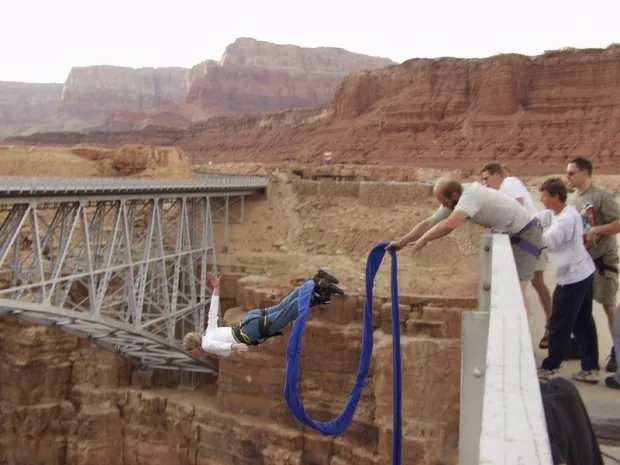
Height claims, “world’s” superlatives, and celebrity drops became standard tools. Sometimes they informed; sometimes they flattened complex places into a single stunt.
What bungee taught the wider industry
- Hero seconds: sell the peak emotion, then support with safety trust signals
- Before/after faces: fear to euphoria is a conversion funnel
- Proof culture: certificates, stamps, and shareable stills as trophies
- Ladder pricing: first jump, second jump, combo, VIP - merchandised clearly
Skydives, via ferratas, and canyon swings adopted the same grammar even when physics differed. Bungee was an early fluent speaker.[1]
The ethics problem in the feed
Marketing that erases residual risk mis-educates customers. Marketing that only shows perfection shames freezers on the platform. Responsible brands pair spectacle with process: real crews, real briefings, real weather cancels.[2][4]
Destination marketing should also ask who benefits when a town becomes a freefall brand - workers, hosts, and landscapes included.[4]
For travelers reading ads
Enjoy the reel. Then audit: operator reputation, inclusions, medical rules, and whether the photos match the product you can actually book. Flagship height products and heritage bridges both advertise boldly; your job is to convert boldness into questions.[3][1]
Bungee did not invent wanderlust. It gave wanderlust a camera angle. Understanding that history makes you a harder target for empty hype and a better customer for teams that still sweat the unglamorous checks between the thumbnail and the leap.[2]
Future marketing will add VR previews and biometric overlays; the core storyboard remains a human leaving safety on purpose. Demand ads that respect that seriousness. The industry grew up on spectacle - it stays grown when spectacle and standards share the same frame.
Sources
- AJ Hackett - brand that globalized commercial bungy imagery (2026)
- AJ Hackett Bungy NZ - destination marketing through product (2026)
- Skypark Macau - height-as-spectacle marketing (2026)
- UN Tourism - tourism promotion and development context (2026)
Image credits
- Photo: Diego Delso / Wikimedia Commons (CC BY-SA 4.0)
- Photo: Don Graham from Redlands, CA, USA - God bless it! / Wikimedia Commons (CC BY-SA 2.0)