The entire sport hangs - literally - on a cord that must stretch a long way, store energy, and give it back without failing. Commercial bungee cords are specialized elastic assemblies, typically built from many natural latex rubber strands bound and protected so they share load. They are not the flat tarp straps in a garage bin, and they are not climbing ropes that barely stretch. They are designed for repeated, controlled elongation under human body weights within documented ranges.[1]
At a materials level, rubber’s elasticity lets the cord convert kinetic energy into elastic potential energy and back again as you bounce.[2] Manufacturers and operators care about strand quality, consistent diameter, and how cords are terminated - stitched, bound, or otherwise finished so ends do not become weak points. A protective sheath or wrapping may guard against abrasion and weather while still allowing stretch. Exact recipes vary by supplier and operator tradition; what matters to jumpers is that reputable sites can explain their cord system and its inspection cycle.
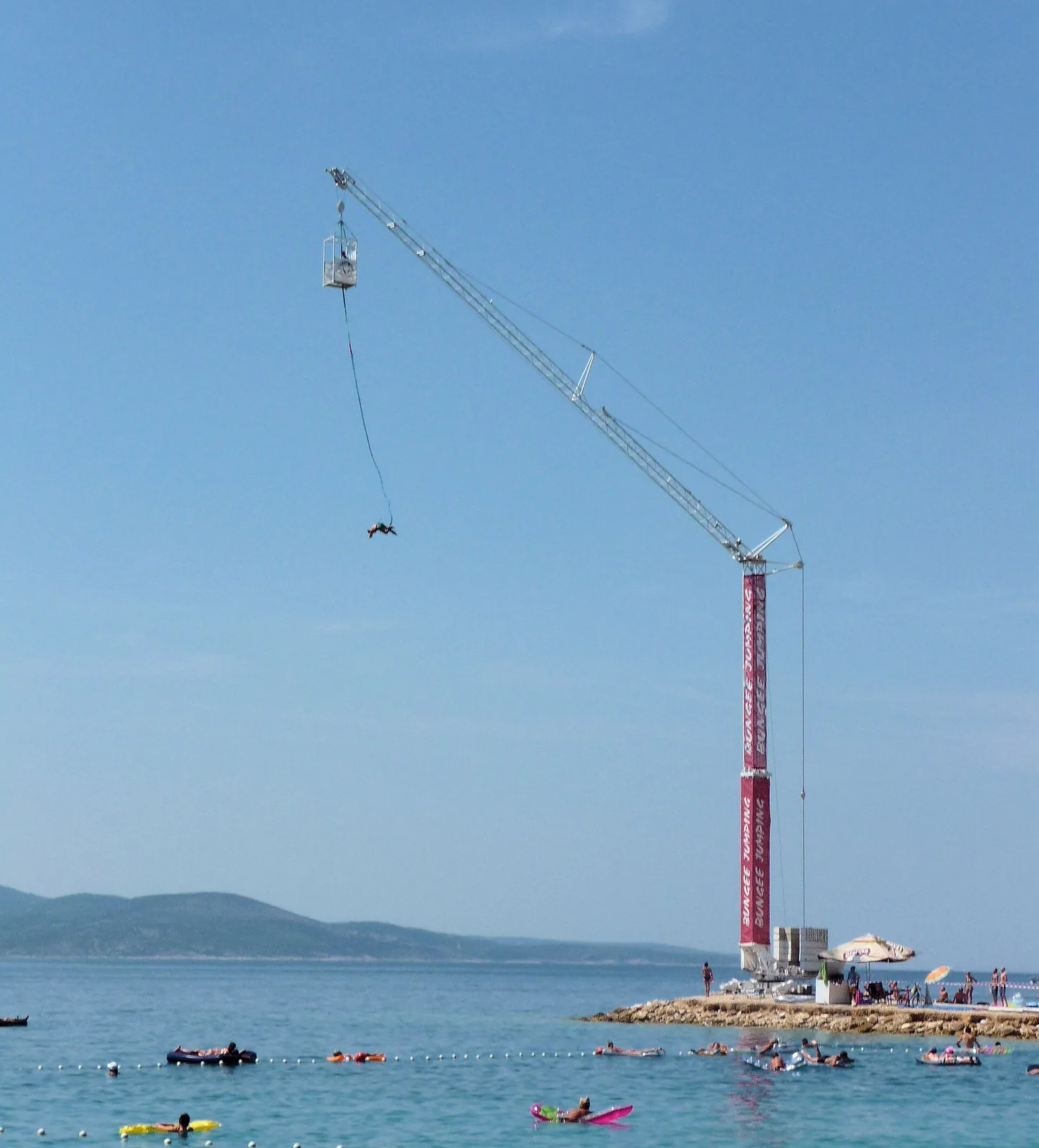
Making a cord is a craft of uniformity. Strands should share load; a few damaged strands shift stress to neighbors. Length is chosen for site height and intended freefall/stretch profile. Operators often keep fleets of cords categorized by jumper weight bands so the bottom of the jump lands in a safe zone - above ground or at a planned water touch - without overstretching the rubber past healthy elastic behavior.[1]
Testing and retirement separate tourism products from stunts. New cords may be proof-loaded and measured. In service, staff track jump counts, visible wear, strand breaks, UV and ozone exposure, oil contamination, and abnormal stretch. A cord that “feels different” gets pulled. Shock loads from improper jumps, abrasive platforms, or poor storage shorten life. Leading commercial cultures - shaped in part by pioneers such as AJ Hackett’s operations - treat equipment discipline as brand survival, not paperwork.[3]
Dynamic reality matters: a cord’s behavior depends on temperature, previous stretch history, and load. Hot days and cold days are not identical. That is one reason weighing jumpers and matching cords is a ritual, not a suggestion. Backup systems - secondary connections, body harnesses in addition to ankle attachments where used - acknowledge that no single textile element should be a single point of failure in a well-designed setup.
What jumpers can ask on site: How do you choose cords by weight? How often are cords inspected and retired? Who manufactures or assembles them? What secondary system backs up the primary connection? Clear answers indicate a safety culture. Vague jokes about “it always worked before” indicate a site to skip.
Care and storage sound boring until you imagine UV-baked rubber on a sunny railing all season. Professional sites store cords away from harsh sun, chemicals, and sharp edges when not in use. They dry equipment after wet jumps. They document incidents. That quiet logistics work is why modern commercial bungee has a very different risk profile from early experimental leaps.
Understanding cord construction does not turn you into an engineer on the platform. It does something more useful: it replaces magical thinking with informed trust. You are not hoping a random rope saves you. You are using a multi-strand elastic system, selected for your mass, inspected on a schedule, and run by people whose business depends on the rubber doing exactly what rubber is supposed to do - stretch, recover, and bring you back laughing.
Traceability is an underrated part of cord culture. Professional fleets often label cords, log jump counts by weight class, and remove units that hit thresholds even if they still “look fine.” That predictive retirement is how soft failures get avoided - the slow drift in elastic response that a rushed visual check might miss. When an operator can show you a simple log or explain the rule of thumb they use, you are looking at process maturity.
Environmental enemies of rubber include ultraviolet light, ozone, heat cycling, oils, solvents, and sharp edges on platforms. Sand and grit act like sandpaper when cords drag. Salt air near coastal sites adds corrosion concerns for hardware if not managed. Operators in harsh climates sometimes shorten service intervals compared with mild inland sites. As a traveler, you will not measure ozone; you will notice whether gear is left baking in full sun between jumps or staged thoughtfully in shade bags and racks.
Secondary systems deserve equal curiosity. Many commercial setups combine ankle attachments with a body harness, or use full-body systems depending on site design and local practice. Connectors should be rated, compatible, and closed/locked per procedure. The cord is the star of marketing photos; the quiet hardware and backup path are what keep a single-point fantasy from becoming a single-point failure.
Homemade or “budget experimental” cords have no place in paid public jumping. The history of the sport includes eras of thinner safety culture; modern customers benefit from refusing nostalgia for that risk. If a vendor cannot explain manufacture, testing, and inspection without hand-waving, take your adrenaline budget to a site that treats latex like life-support equipment - because for the duration of freefall, that is exactly what it is.
Appreciating cord craft changes how the bounce feels. When the stretch grabs and returns you skyward, you can picture strands sharing load, energy storing and releasing, a tested object doing a known job. Wonder stays; superstition fades. That is the right mental model for a sport that looks reckless and runs on engineering discipline.
Sources
- Wikipedia - Bungee jumping (2024)
- Wikipedia - Elasticity (physics) (2024)
- AJ Hackett (2024)
Image credits
- Photo: MirandaUrbina / Wikimedia Commons (CC BY-SA 3.0)
- Photo: Andrzej19 / Wikimedia Commons (CC BY 3.0)