A near-miss is when a jump almost goes wrong and doesn't. Missed attachment caught in time. Clearance closer than planned. Gear trouble that could have been worse. Those moments are where you learn what actually fails.
This is not a collection of ghost stories. It's the common patterns behind close calls, plus what you should do with that information before you book.
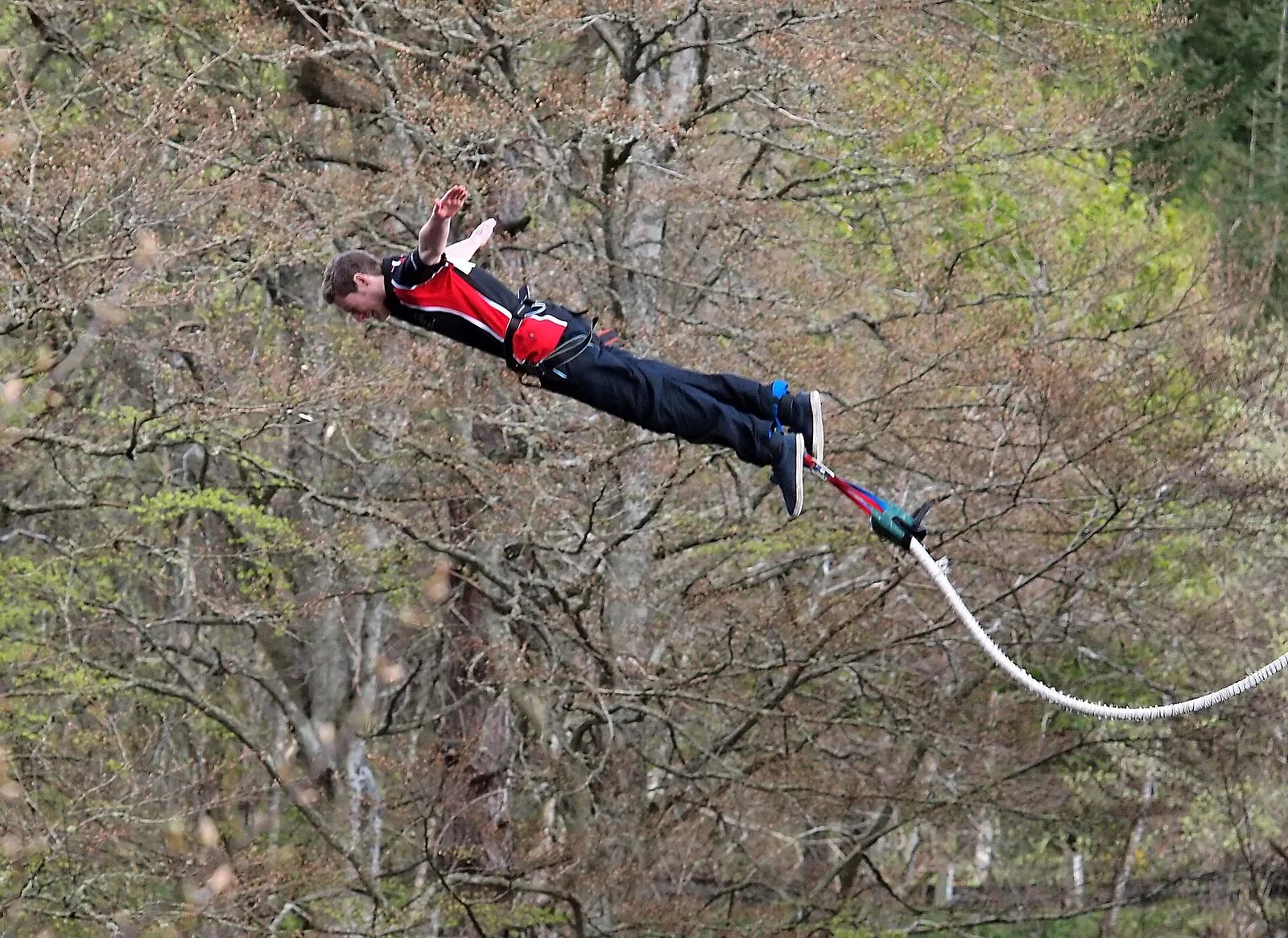
What counts as a near-miss
Examples:
- Staff catch a missing backup attachment before the countdown
- Cord stretch is closer to water or rock than planned
- Someone almost jumps before checks are finished
- Gear fails or partially fails and the person still survives
The useful question is never "was it scary?" It is "what almost broke, and would this site catch that next time?"
When the cord or hardware is the problem
Public accounts of cord failure are uncommon, which is why they stick. First-person reporting exists of a cord snapping mid-jump and the long medical and mental recovery afterward.[1] Video has also circulated of a tourist in Thailand surviving after a cord snapped and threw him into the water below.[2]
Those cases are not proof every cord is about to fail. They are proof gear condition, inspection, and retirement schedules matter. Good operators inspect daily and double-check connections for the same reason - so a worn or mis-set system gets caught on the ground, not in freefall.[3]
What to take from it: ask how they check gear. Watch whether checks look real. If hardware looks neglected and staff brush off questions, leave the site.
When the attachment check is the problem
A lot of close calls - and some disasters - sit in a simple gap: one person thinks the clip is done, another thinks it is still pending. Fatal cases make the risk obvious. In 2026, Brazilian authorities investigated a rope-jump death after instructors allegedly failed to attach the safety rope before the jump; bystanders can be heard reacting as she falls.[4] That is not a "near-miss." It is what happens when the miss is not caught.
Serious commercial sites treat two-person verification as normal, not optional theater during a rush.[3]
What to take from it: watch the final check. If you cannot tell who owns the last "you're good to go," or only one rushed person is handling everything while chatting, that is a bad sign. You can ask whether the backup has been checked. That is a normal question.
When clearance is tighter than planned
A jump can "succeed" and still be a near-miss if you skim water or ground harder than anyone intended. Wrong stretch estimate, wrong weight, jumper motion, or changing conditions all shrink the margin - especially on dramatic gorge sites where the postcard view leaves less room for casual math.
What to take from it: weight honesty matters. So do weather holds. Operators that still jump in ordinary rain are common; operators that push strong wind or bad visibility to keep the queue moving are gambling with clearance and control.[3]
When communication is the problem
Loud platforms, mixed languages, shift changes, and long queues all create the same failure: two people holding different mental checklists. Nobody has to be evil for that to kill someone.
What to take from it: listen for short, clear commands. Watch whether staff correct each other without ego. If the edge looks like chaos with no obvious lead, you are looking at a communication problem on a bad day waiting to get worse.
When the jumper is the random variable
Lying about weight, hiding injuries, yanking at harnesses mid-check, or leaping before staff finish turns a designed process into improvisation. Freezing on the count is common and usually fine. Diving off early is not.
What to take from it: cooperate with the process. If you need to stop before you are committed, say so out loud. That is safer than "just get it over with" outside the checklist.
How to use near-miss stories without panicking
Quiet, boring jumps rarely get essays. Scary ones do. Read for the mechanism:
- What failed or almost failed?
- What caught it - or failed to catch it?
- Would the operator in front of you catch the same thing?
Also read our pages on accident causes, safety standards, and site red flags.
If something almost goes wrong and you still land fine, tell the operator. If the response is defensive or joking, that is information about whether they treat scares as free lessons or as PR problems.
Bottom line: near-misses point to the same weak spots every time - gear condition, attachments, clearance math, and communication under pressure. Pick sites that look like they already take those seriously.
Sources
- The Guardian: My bungee cord snapped
- KPLC / CNN: Tourist survives after bungee cord snaps into water (Thailand)
- AJ Hackett Bungy NZ: Is bungy jumping safe? (inspections, double-checks, weather)
- BBC: Brazil rope-jump death after cord not attached
Image credits
- Photo: Internet Archive Book Images / Wikimedia Commons (No restrictions)
- Photo: David Baird / Wikimedia Commons (CC BY-SA 2.0)