On New Year’s Eve 2011, Erin Langworthy, a 22-year-old Australian from Perth, jumped from the Victoria Falls Bridge and her bungee cord broke. She fell into the Zambezi with her ankles still bound, swam and was dragged through the rapids, and survived. Video of the fall, filmed by a friend on the bridge, went around the world within days [1][2][3]. This page sets out what is on the record about the accident: the jump, the rescue, her injuries, the operator’s investigation and what changed afterwards. It draws on news reports from January and February 2012 and on Langworthy’s own account, published by the Guardian in 2014.
The jump and the bridge
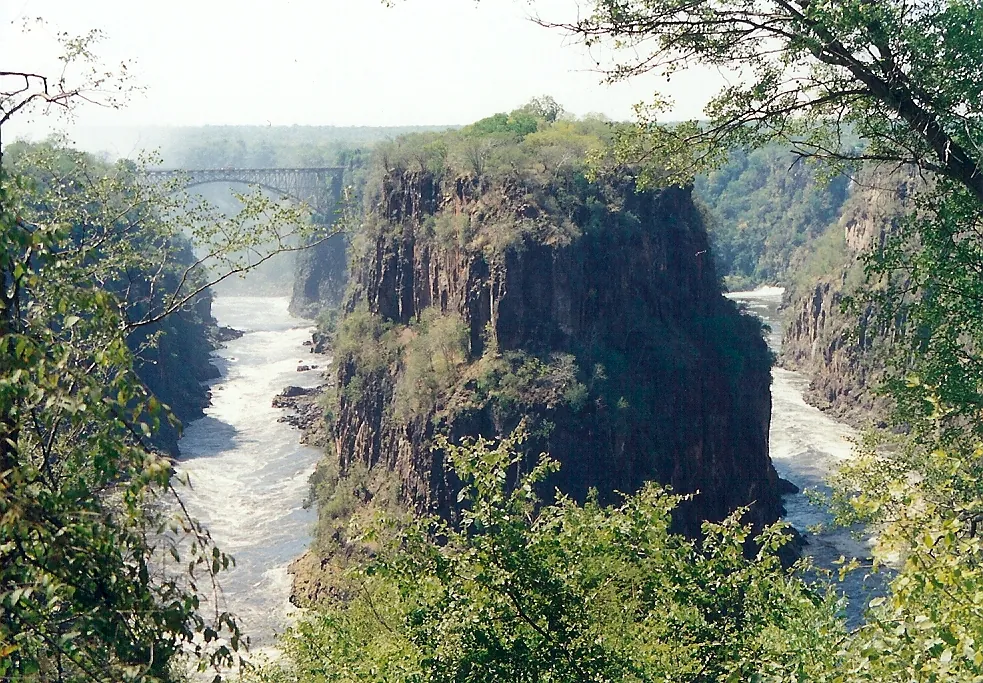
The Victoria Falls Bridge has joined Zimbabwe and Zambia across the Batoka Gorge since 1905, and its bungee platform sits 111 m above the Zambezi, with the falls in view [4][1]. In 2011 the jump was run, as it still is, by Shearwater, the Victoria Falls adventure company; news reports at the time used both “Shearwater Adventures” and “Victoria Falls Bungee” for the operation [2][5][6]. Shearwater said it had run the jump for 17 years and more than 150,000 jumps without a cord failure [2][3].
Langworthy had never bungee jumped before. She was travelling in Africa after finishing university, joined a tour group heading to the bridge, and had been white-water rafting on the river that morning [7][2]. By her account she was the 105th person to jump that day, and jumped at about 5.30pm, ankles strapped together, falling forward with her arms spread [7].
What happened when the cord snapped
A few seconds into the fall she felt a jolt across her chest, then sped up again. She brought her arms up over her head, locking her hands together, just before she hit the water; she later credited that reflex with stopping her going in head-first [7][2]. The Guardian, citing the Zambia Post, reported that the cord snapped as she reached the bottom of her descent, about 20 m above the river [1]. Langworthy’s own later account gives a larger figure: she said she fell for four seconds after the break, a distance of up to 40 m, and that the cord had snapped near the top, leaving about 30 m of it attached to her [7]. The sources do not reconcile those numbers, and we found no published technical report giving an exact break point.
Two things worked in her favour. She landed in water rather than on rock, and, as she put it, it had rained the day before, so the river was full [7].
In the river
Her ankles were still tied, and the length of cord still attached kept catching on rocks and debris. More than once it snagged and pulled her under; at one point, running out of air, she had to dive down and pull it free before she could surface [1][2][7]. The current carried her toward rapids; she said the safety briefing from that morning’s rafting trip helped [2]. She eventually wedged an arm between rocks at the edge of the river and held on. She later learned she had been in the water for about 40 minutes, and that she had come out on the Zimbabwean side of the river without her passport [7]. The Zambezi below the bridge has crocodiles; Langworthy said she had seen some in the water that morning, but only learned afterwards how real that risk was [7][2].
Rescue and injuries
The first person to reach her was a member of the bungee crew, who pulled her out by her harness [7]. Getting to hospital took hours. She jumped at 5.30pm and reached the hospital in Victoria Falls at about 11pm, and was later flown to South Africa because facilities were basic [7][5].
Reports of her injuries agree on the serious part and differ on one detail. All describe heavy bruising and damage to her lungs; she told ABC News that her lungs were her main concern and were keeping her from flying home, and in 2014 she said they had partially collapsed [2][7]. ABC News and AFP reported a fractured collarbone [2][5], but in her 2014 account she said X-rays showed no broken bones [7]. She spent about a week in hospital and later returned home to Australia [1][7].
Shortly afterwards she told ABC that she had received no spoken warning about risks before jumping and had signed a form saying she jumped at her own risk [2]. Members of the bungee crew visited her in hospital and, in her words, were very apologetic [7].
The investigation
Officials on both sides of the river responded. Zambia opened an investigation, and its tourism minister, Given Lubinda, said the jump remained safe, that about 50,000 people made it every year, and that the probability of an incident was “one in 500,000 jumps” [1]. He then made a bungee jump himself to reassure visitors [5]. Zimbabwe’s tourism minister, Walter Mzembi, called it a possible freak accident but urged operators to keep standards high, and the mayor of Victoria Falls said the viral video had hurt tourism [8].
The steps Shearwater took, in order:
| When (2012) | What the operator did |
|---|---|
| By Jan 9 | Sent the broken cord to South Africa for testing; replaced equipment, brought in new cords and started daily test jumps by its own staff [3][2] |
| From Jan 11 | Voluntarily suspended bungee jumps, initially announced as a two-day pause, so auditors, managers and crew could analyse the failure and review new procedures; the bridge swing, slide and tours kept running [5] |
| Feb 1 | Announced the findings and said jumping would resume on Feb 2 [6][9] |
The investigation, as reported by Travelnews, combined a safety audit and inspection of the whole bungee system by IRATA-qualified auditors with a forensic analysis of the broken cord. The auditors found that the operation had met the international code for bungee jumping, AS/NZS 5848:2000, before the accident. The cord analysis found that its rubber was weaker than it should have been and weaker than newer rubbers. Shearwater said it would take that up with the rubber manufacturer, switch to the newer rubber, which it said tested far stronger than the code requires, and test samples from every future batch before putting it into service. It also introduced new procedures for handling and managing cords [6].
We could not find any published report from an independent regulator, so the findings above are the operator’s account of its auditors’ and investigators’ conclusions. Langworthy’s own view, two years later, was that the break was “just wear and tear” and that measures had since been introduced to stop it happening again [7].
How it compares with bungee safety norms
Cord breaks are uncommon in the accident record. Many of the fatal accidents involve a jumper who was not attached, a cord too long for the drop or a badly fitted harness, often at unlicensed sites (see bungee jumping accidents and deaths, and how bungee jumping goes wrong for each failure type and the checks against it). The Victoria Falls case is unusual because the operator was established and, by its auditors’ finding, compliant with the code.
That makes the lesson about materials. AS/NZS 5848, the code the auditors measured against, dates from a New Zealand-only version published in 1990, and Standards New Zealand began its first full revision in more than 25 years in 2026, citing advances in harness and cord technology and better record-keeping [10]. Large operators also retire cords well before they wear out. AJ Hackett, for example, says each of its cords has a rated life measured in jumps, hours of use and UV exposure, that cords are retired only a fraction of the way through it, and that no cord has snapped at its New Zealand sites [11]. Batch testing of new rubber, which Shearwater adopted after this accident, adds a check on the material before the first jump rather than relying on usage logs alone [6]. For how cords are built and rated, see how bungee cords are made and tested.
The jump reopened in February 2012 and still runs. Shearwater currently charges US$194 for the 111 m bridge bungee, takes jumpers aged 14 and over weighing 40 to 120 kg, and asks jumpers to bring a passport for the bridge pass [4]. Planning details are in our Victoria Falls trip guide and weight and age limits by operator.
Other well-known bungee accidents
The Victoria Falls accident is one of a small number that are widely searched. The 1986 death of Michael Lush during a rehearsal for a BBC stunt is covered on the Michael Lush bungee accident page. A table of other notable cases, from the first US deaths in 1991 and 1992 to recent rope-jump deaths in Brazil, is in our guide to bungee jumping accidents and deaths.
FAQ
Did Erin Langworthy survive?
Yes. She swam and was carried down the Zambezi with her ankles still tied, held on to rocks at the river’s edge and was pulled out by a member of the bungee crew. She spent about a week in hospital before returning home to Australia [1][7].
When did the Victoria Falls bungee accident happen?
On December 31, 2011, New Year’s Eve. Langworthy said she jumped at about 5.30pm [1][7].
How far did Erin Langworthy fall?
The bungee platform is 111 m above the river, but she did not fall that far freely: the cord stretched first and broke during the descent. The Guardian, citing the Zambia Post, put the break about 20 m above the water; Langworthy later said she fell for four seconds, up to 40 m, after it broke [1][7].
Why did the bungee cord snap at Victoria Falls?
According to the operator’s investigation, forensic analysis found the cord’s rubber was weaker than it should have been. Auditors found the operation had otherwise complied with the AS/NZS 5848:2000 code [6].
What were Erin Langworthy’s injuries?
Severe bruising and lung damage; she said in 2014 that her lungs had partially collapsed. ABC News and AFP reported a fractured collarbone, though her own later account says X-rays found no broken bones [2][5][7].
Who ran the Victoria Falls bungee jump in 2011?
Shearwater, which still runs it. Reports at the time also called the operation Victoria Falls Bungee [2][6][4].
Is the Victoria Falls bungee jump still open?
Yes. It resumed on February 2, 2012, after a suspension for the investigation, and Shearwater currently sells the 111 m jump for US$194 [6][4].
Is there a video of the Victoria Falls bungee accident?
Yes. Her friend Rebecca Johnson filmed the jump from the bridge, and the footage was widely shared online and broadcast by news outlets in January 2012 [2][3].
Sources
- The Guardian (Jan 8, 2012): Victoria Falls bungee jumper survives after cord snaps during descent
- ABC News (Jan 9, 2012): Survivor of 365-foot bungee fall says ‘maybe’ to future jumps
- VOA Zimbabwe (Jan 9, 2012): Bungee-jumping firm in Victoria Falls awaits cord test results
- Shearwater Victoria Falls: Victoria Falls Bridge activities (bungee jump, 111 m, price, limits)
- Mail & Guardian / AFP (Jan 12, 2012): Bungee jumps suspended at Vic Falls
- Travelnews (Feb 1, 2012): Vic Falls Bungee resumes (investigation findings)
- The Guardian (Apr 4, 2014): Experience: my bungee cord snapped, by Erin Langworthy as told to Sophie Haydock
- VOA Zimbabwe (Jan 12, 2012): After spectacular fall, bungee jumping suspended in Victoria Falls
- NewsDay Zimbabwe (Feb 1, 2012): Vic Falls bungee jumping back
- Standards New Zealand (Mar 31, 2026): Bungy jumping standard to take a leap forward with new revision (AS/NZS 5848)
- AJ Hackett Bungy New Zealand: Is bungy jumping safe? (cord retirement)
Image credits
- Photo: abi.bhattachan / Wikimedia Commons (CC BY 2.0)
- Photo: JackyR / Wikimedia Commons (CC BY-SA 3.0)