Most bungee jumps end exactly as designed. When one does go wrong, the cause usually falls into one of a small number of failure types, and each has a known countermeasure. This guide goes through them one at a time: what physically fails, real cases where it happened, and the specific rule or practice that exists to stop it. For how often accidents happen and a fuller list of deaths, see bungee jumping accidents and deaths.
The prevention rules quoted here come mainly from two places: Illinois’s bungee regulations, a detailed set of rules written into law, which cover jumps from cranes and other mechanically operated platforms, and AJ Hackett Bungy New Zealand’s description of its own procedures [1][2]. Other jurisdictions and operators differ in detail.
Failure types at a glance
| What goes wrong | Real cases | Main safeguard |
|---|---|---|
| The cord snaps | Victoria Falls 2011; Pattaya 2023; Kyrgyzstan 2024 | Cord life limits, early retirement, inspection through the day |
| Wrong cord for the jumper or the height | New Orleans 1997; Stechelberg, Switzerland 2000 | Certified weigh-in, cord chosen to manufacturer’s spec, marked cords |
| Jumper not attached, or attached wrong | Ontario 1992; Michael Lush, UK 1986; Colombia 2021; Chile 2024; Brazil 2026 | Two operators check every connection; two attachment points |
| Jumping before the crew is ready | Spain 2015 (two separate deaths) | One jump master in control; physical gate or tether until release |
| Platform or crane failure | Michigan 1992 | Engineered platforms, rated hardware, annual engineering review |
| Problems after the jump | Chile 2024 | Rehearsed recovery and a backup lowering method |
1. The cord snaps
A bungee cord is a bundle of rubber strands, and rubber ages. It weakens with use, with sunlight and with time on the shelf, which is why a cord that has done hundreds of safe jumps can still fail. Breaks are rare, and they make the news partly for that reason. Three are well documented.
- Victoria Falls Bridge, Zambia/Zimbabwe, December 31, 2011. Erin Langworthy, 22, fell into the Zambezi when her cord broke on the 111 m jump and survived with her ankles still bound [3][4]. The operator’s investigation found the rubber was weaker than it should have been; it switched to a newer rubber and began testing samples from every batch before use [5]. The full story is in Erin Langworthy and the Victoria Falls bungee accident.
- Pattaya, Thailand, January 2023. A 39-year-old tourist from Hong Kong was jumping from a platform about ten floors high when his cord snapped just before the bottom of the jump. He hit the water, surfaced with the lower half of the cord still tied to his feet and swam out; staff pulled him from the water and the park refunded his jump and paid for scans [6].
- Chunkurchak gorge, Kyrgyzstan, July 2024. A 39-year-old man died when the rope broke on a 25 m jump at the Fly Jump complex. Police detained the owner and opened a criminal case for “creating danger to consumers” [7].
What stops it. The defence is to take cords out of service long before they wear out, and to keep looking at them. Illinois’s rules spell this out in unusual detail [1]:
- A cord must be withdrawn when it reaches its rated jump life, and never used past the manufacturer’s maximum.
- It must be withdrawn early if it has had more than 250 hours of daylight exposure (unless fully sleeved), is more than six months past its manufacture date, shows bunched or unevenly tensioned threads, has more than 5% of its threads broken, has touched solvents or abrasives, or shows any discoloration.
- The jump master inspects the whole cord before opening and at least four times a day, and records it. A cord that suddenly behaves differently is pulled immediately.
- Retired cords are destroyed by cutting them into lengths of 5 ft (about 1.5 m) or less, so they cannot drift back into use.
AJ Hackett describes the same principle in its own terms: each cord has a life measured in jumps, UV exposure and hours of use, and the company removes it “when it’s only a fraction of the way through its technical life.” It says a cord has never snapped at its New Zealand sites [2]. The Victoria Falls case added a further lesson: inspection limits cannot catch a cord that was weak from the start, which is why the operator added batch testing of new rubber [5]. Our guide to how bungee cords are made and tested covers cord construction in more depth.
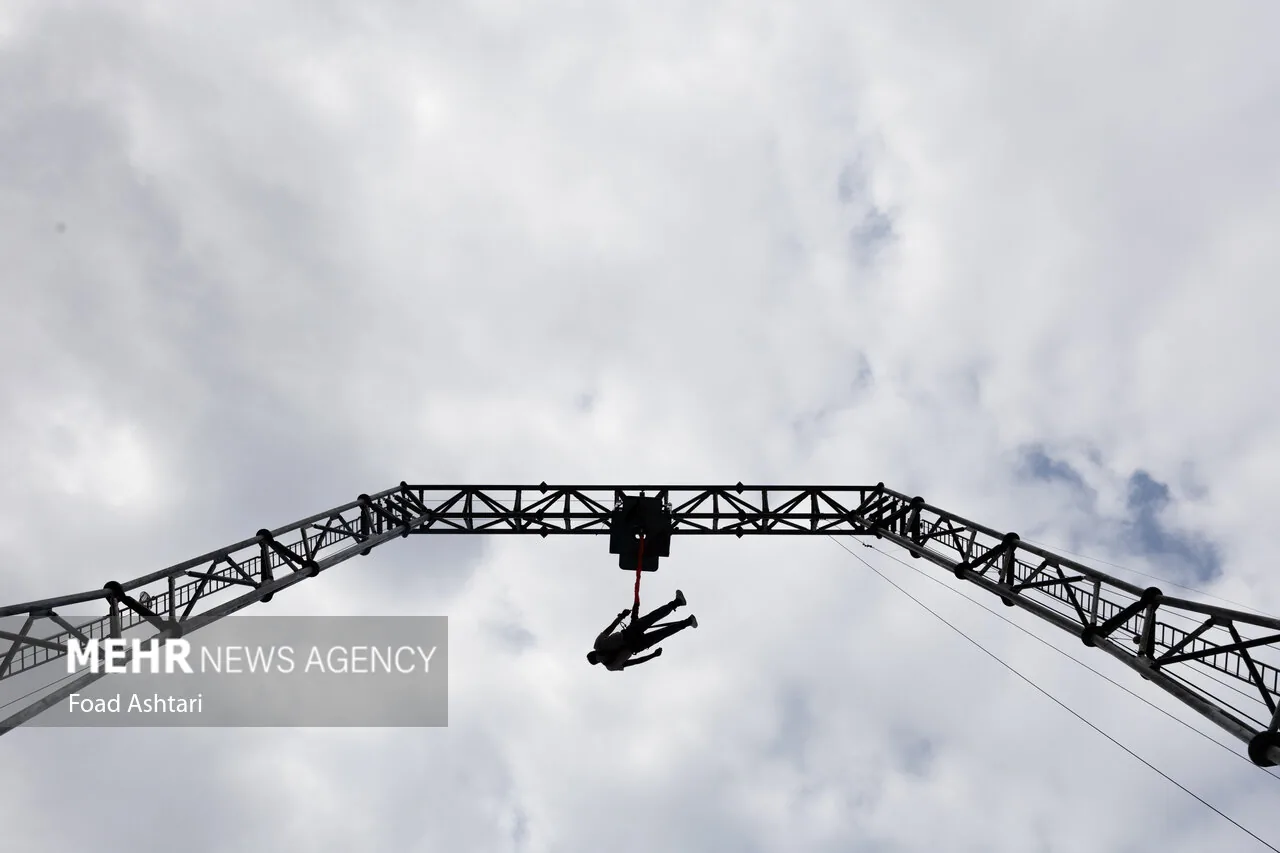
2. The wrong cord for the jumper or the height
A cord is chosen for a weight range and a drop. Too long or too stretchy for the jumper, and the bottom of the jump arrives below the safe clearance. These accidents are human error rather than equipment failure, and they are usually fatal.
- Stechelberg, Switzerland, May 2000. Matthew Coleman, 22, from Maryland, was the first of a group of seven to jump from a cable-car gondola that stopped at two heights, about 330 ft (100 m) and 590 ft (180 m). He jumped from the lower stop but was attached to a cord marked red, meant for the higher jump; a green cord for the lower jump was also in the gondola. He struck the ground beside the cable-car station. Police said the mistake was clear from the photograph taken of every jump, and investigated the two guides for negligent homicide [8].
- Louisiana Superdome, New Orleans, January 1997. Aerialist Laura Patterson, 43, died rehearsing a bungee routine for the Super Bowl halftime show. A preliminary police finding blamed a volunteer who let out too much cord; organisers said they had found nothing wrong with the equipment [9].
What stops it. Under the Illinois rules the platform stays at one fixed height and the jump master adjusts for each jumper only by choosing the cord, following the operating manual and the manufacturer’s specification. Jumpers are weighed on scales certified under the state’s weights-and-measures law, and their weight is marked on them. The jump master keeps a record of how many times each cord has been used, each item of equipment carries an identification visible to the crew and recorded in a log, and the rules require at least 60 inches (about 1.5 m) of clear space between the lowest point of the jump and the air bag or water below [1]. Marking cords by colour, as at Stechelberg, only works if the crew checks the mark against the jump; the two-person check described below is what catches that slip. This is also why weight limits are enforced strictly and why your weight is checked on the day; see bungee weight and age limits by operator.
3. The jumper is not attached, or is attached wrong
This is the failure that experience does not prevent. Troy Hurtibese, 19, who died in Peterborough, Ontario, in August 1992 after jumping without securing his cord, was described by the Associated Press as a veteran of more than 1,500 jumps [10]. Recent cases show the same pattern:
- Amagá, Antioquia, Colombia, July 2021. Yecenia Morales Gómez, 25, fell roughly 150 ft (about 45 m) from a viaduct between Amagá and Fredonia on her first jump; her harness was on but she was not yet attached to the cord. Local reports said she had mistaken a signal meant for her boyfriend [11]. The operator, Sky Bungee, denied this, saying nobody else was jumping at the time and the previous jumper was still being recovered. Reports also said the company did not appear to have operating permits; it described bungee as a new and lightly regulated activity in Colombia [12][11].
- Cajón del Maipo, Chile, February 2024. Prosecutors said Diego Albornoz, 23, had a harness fitted incorrectly; he was left hanging and died of positional asphyxia [13]. The company’s municipal licence had lapsed [14].
- Ponte do Esqueleto, between Limeira and Cordeirópolis, São Paulo state, Brazil, June 2026. Instructors helped a woman off a disused bridge without attaching her rope; an onlooker can be heard shouting at them to attach it. Three men were arrested. This was a rope jump, which uses low-stretch climbing rope and a pendulum swing, but the missed connection is the same failure [15].
Hardware can also come apart. Michael Lush died in 1986 rehearsing a BBC stunt when a carabiner came loose from its eyebolt during a jump from a crane [16]; the details are in the Michael Lush accident.
What stops it. Redundancy, at every link. AJ Hackett says the cord, ropes, knots and connections to the jumper are “visually and verbally double checked by both operators” before each jump, and that jumpers are always connected at two points through a main harness rather than by foot ties alone [2]. Illinois requires a final inspection by the jump master using a checklist, screw-gate carabiners with a minimum breaking load of 4,400 lb (about 2,000 kg), all hooks and shackles “moused” (bound so they cannot slip open), ankle bindings with built-in redundancy, and harnesses approved by the licensed engineer who inspects the site each year [1].
4. Jumping before the crew is ready
Some of the clearest cases involve a jumper who was partly connected and went before the crew had finished. Two happened in Spain within three weeks of each other in 2015.
- Lanjarón, Granada, July 21, 2015. Kleyo De Abreu, 23, from London, died jumping from the Tablate Bridge. The Guardia Civil found that the supervisor had attached her harness and moved away to tension the ropes, and that she jumped before being told to, probably striking the older Roman bridge below. One supervisor had been left to manage 14 people, which police called “not enough”; the company owner and the supervisor were charged [17].
- Cabezón de la Sal, Cantabria, August 2015. Vera Mol, 17, from the Netherlands, fell about 32 m from the Cedeja viaduct while a monitor was still adjusting her harness. He is believed to have said “no jump,” which she may have heard as “now jump” [18]. A court later found the phrase “could perfectly well be understood as an explicit order to jump”, and said the instructor should also have checked her ID to confirm she was over 18. The company director faced prosecution for homicide through negligence. The bridge was a public road viaduct; Spain had no specific bungee legislation, and its highway laws bar using road bridges for jumping [19][18].
What stops it. Clear authority and a physical barrier, so the jumper cannot go early even if they mishear. Illinois requires that jumps happen “only under the direct control of a jump master”, that a gate stays across the jump point until the platform is at jump height, and that the jumper stays clipped to a safety line until ready to jump. Crew respond to move signals only from the jump master but obey a stop signal from any employee, and the jump master must make sure the number of jumps leaves time for each task to be done properly [1]. That last rule speaks directly to the Lanjarón case. For jumpers, the practical rule is simple: wait for the jump master’s own command, and treat any unclear instruction as “stop.”
5. Platform, crane or rigging failure
Sometimes the structure fails rather than the cord. At the Auburn Corn Festival in Michigan on July 10, 1992, Joel Gentry, 28, fell 180 ft to his death in front of about 300 people, and a second man was critically injured when the jumping platform crashed to the ground [10]. In that early US boom people jumped from bridges, cranes, balloons and temporary platforms, and that summer’s deaths led several states to halt jumping [10].
What stops it. Illinois treats the platform and its lifting equipment as engineered structures: every component needs a safety factor of at least 3, the site needs a licensed engineer’s report before construction and an engineering evaluation every year, and the jump master checks the crane’s certificate, wire rope, outriggers and hardware daily. The manual must also set a maximum wind speed for operating [1].
6. Problems after the jump
A jump is not over when the bouncing stops. In the Chilean case above, prosecutors said the jumper hung for about half an hour calling for help before he died [13]. Erin Langworthy spent about 40 minutes in the Zambezi before she was out of the water [4]. Illinois requires an alternative way to recover a jumper if the main lowering system fails [1]; a well-run site should be able to explain its recovery plan, whether that is lowering to a boat, raising to the platform or a rescue team at the bottom.
The pattern behind the cases
Look across these incidents and a pattern stands out. Several of the fatal ones happened at operations with little or no oversight: a road viaduct where jumping was not permitted in Spain, a company in Colombia reported to lack permits, a Chilean operator with a lapsed licence, and a rope-jump site at Campo Magro, Brazil, that the local council said had been closed and had no operating licences when a tourist died there in November 2024 [18][12][14][20]. In the Campo Magro case police later charged the owner and an instructor, and a forensic expert listed three separate errors, including a safety line about four metres too long [21]. Cord breaks, by contrast, are the failure type people fear most, yet two of the three jumpers in the documented cases above survived, both after landing in water.
That pattern is why the most useful question to ask an operator is about procedure, not equipment: who checks your connection, how many people check it, and what the command to jump is. Our guides on choosing a reputable bungee operator and red flags at a bungee site turn this into a checklist.
FAQ
Has a bungee cord ever snapped?
Yes, though it is rare. Documented cases include Erin Langworthy at Victoria Falls in 2011, a tourist at Pattaya, Thailand, in January 2023, and a fatal rope break at a 25 m jump in Kyrgyzstan in July 2024 [3][6][7]. AJ Hackett says a cord has never snapped at its New Zealand sites [2].
What happens if a bungee cord snaps?
The jumper falls the remaining distance, usually with part of the cord still tied to their ankles. Over water, people have survived: Langworthy fell into the Zambezi and swam to the bank, and the Pattaya jumper surfaced and swam out [3][6].
Why do bungee cords break?
Rubber weakens with jumps, sunlight and age. Rules such as Illinois’s require cords to be retired at their rated jump life, or early after 250 hours of daylight exposure, six months from manufacture, or signs of thread damage [1]. At Victoria Falls the investigation found the rubber itself was weaker than it should have been [5].
How long does a bungee cord last?
It depends on the manufacturer’s rated jump life. Illinois requires withdrawal at that limit, and earlier if the cord has had more than 250 hours of daylight exposure (unless fully sleeved) or is more than six months past its manufacture date [1]. AJ Hackett says it retires cords a fraction of the way through their technical life [2].
What is the most common way bungee jumping goes wrong?
There are no official global statistics. Among the fatal cases on this page, most involved human error, such as a missed attachment, a wrong cord or a jump before the crew was ready, rather than a cord breaking [10][8][17][18][15].
Can a bungee cord be too long?
Yes. In Switzerland in 2000 a jumper died after guides attached a cord meant for a 180 m jump to his 100 m jump [8], and a 1997 rehearsal death in New Orleans was blamed on too much cord being let out [9]. Operators weigh jumpers and choose a cord rated for that weight and drop [1].
Has anyone jumped without being attached?
Yes. Cases include Troy Hurtibese in Ontario in 1992, Vera Mol and Kleyo De Abreu in Spain in 2015, and Yecenia Morales Gómez in Colombia in 2021 [10][18][17][11]. Two-person checks and keeping the jumper tethered until release exist to prevent this [2][1].
Sources
- Illinois Administrative Code tit. 56 § 6000.340: Bungee jumping (cord life, inspection, platform and operating rules)
- AJ Hackett Bungy New Zealand: Is bungy jumping safe? (checks, two-point attachment, cord retirement)
- The Guardian (Jan 8, 2012): Victoria Falls bungee jumper survives after cord snaps during descent
- The Guardian (Apr 4, 2014): Experience: my bungee cord snapped, by Erin Langworthy as told to Sophie Haydock
- Travelnews (Feb 1, 2012): Vic Falls Bungee resumes (investigation findings)
- CNN via KPLC (Mar 27, 2023): Man's bungee cord snaps, hurling him into water below
- 24.kg (Jul 8, 2024): Deadly Fly Jump, police detain owner of sports complex
- Associated Press via The Seattle Times (May 16, 2000): Rope was too long in American's fatal bungee jump, Swiss police say
- UPI (Jan 26, 1997): Human error cited in bungee death
- Associated Press via Los Angeles Times (Nov 22, 1992): Bungee jumpers in stretch run for their rights
- New York Post (Nov 3, 2022): Bungee jumper leaped to her death after ‘mishearing’ instructor (Colombia, 2021)
- Infobae (Jul 23, 2021): operator’s statement after bungee death in Antioquia, Colombia, in Spanish
- The Clinic (Feb 23, 2024): prosecutors’ case over bungee death in Cajón del Maipo, in Spanish
- La Tercera (Feb 21, 2024): operator's licence had lapsed and it was not registered with Sernatur, in Spanish
- BBC News (Jun 15, 2026): Brazil woman dies after rope-jumping instructors fail to attach cord
- Wikipedia: The Late, Late Breakfast Show (death of Michael Lush, 1986)
- BBC News (Jul 31, 2015): Spain bungee jump death: two charged with manslaughter of Kleyo De Abreu
- El País in English (Aug 13, 2015): Tour firm that organized Dutch teen’s fatal bungee jump faces legal action
- The Independent (Jul 4, 2017): Dutch teenager Vera Mol died bungee jumping due to Spanish instructor’s ‘poor English’
- g1 (Nov 4, 2024): Campo Magro park was closed by the council and unlicensed, in Portuguese
- Banda B (Dec 19, 2024): owner and instructor charged after Campo Magro rope-jump death, in Portuguese
Image credits
- Photo: Andrzej19 / Wikimedia Commons (CC BY 3.0)
- Photo: Fouad Ashtari / Wikimedia Commons (CC BY 4.0)