On screen, bungee cords are magic ropes. Heroes leap from dams mid-chase, kiss in freefall, or survive explosions while elastic physics politely waits for the plot. Real commercial bungee is slower, louder with briefings, and obsessively interested in your body weight. Loving movie freefall is easy; mistaking it for a training video is how myths get jumpers hurt or disappointed.[1]
What film often gets roughly right: the visceral freefall sensation, the elastic rebound, the comedy of terror on people’s faces, and the visual drama of a tiny human against a huge structure. Directors correctly sense that a bridge or canyon is cinema-ready. Stunt teams, when productions hire them, bring genuine expertise in rigging and timing.[2]
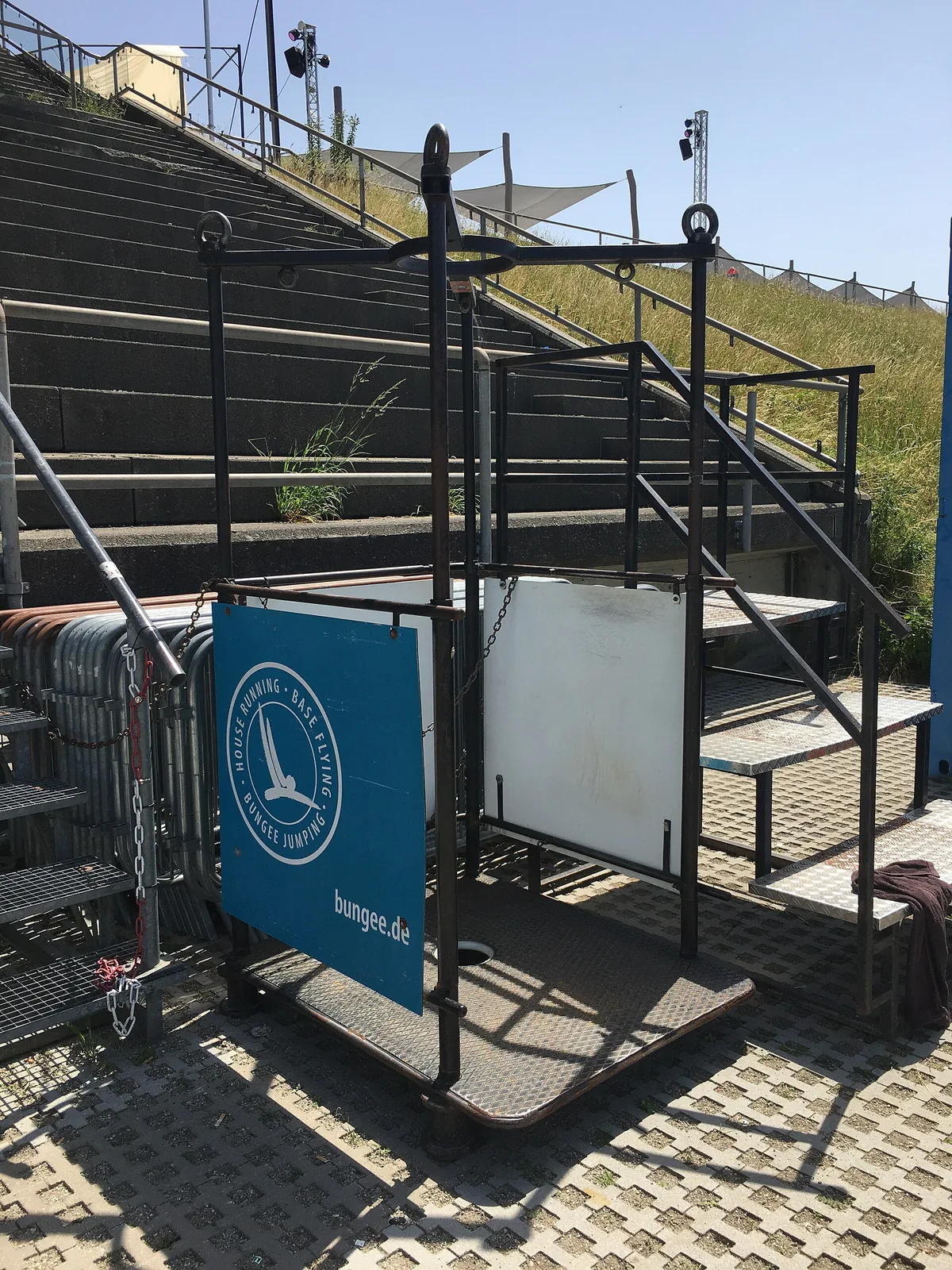
What film loves to invent: cords that appear from nowhere with no weight calculation; heroes who clip in one-handed while running; rebounds that fling people onto rooftops with superhero precision; conversations shouted casually during freefall as if wind and adrenaline were optional; villains cutting cords that somehow still allow last-second saves every time. Editing hides the take where the stunt performer waited for a safety check. Sound design adds whooshes your ears may not prioritize when your heart is at 180.
Television challenge shows occupy a middle ground. They often use real commercial or crane rigs, which means real harnesses and real freefall - but the framing still prioritizes host banter and reaction cams. The safety officer’s veto power may be real while being invisible in the cut. Good productions empower that veto; poor ones pressure talent. Viewers rarely see which culture prevailed.[3]
Reverse bungee and catapult-style rides in entertainment parks further blur categories. They share elastic spectacle with bungee but reverse the direction - shot upward rather than diving down. Movies sometimes mash these aesthetics together. Knowing the difference helps you book the experience you actually want.
Fact-check for future jumpers who grew up on film: you will be weighed; you will rehearse the exit; you may wait for wind; you will not improvise a mid-air gunfight; retrieval might be a boat, crane, or hoist, not a casual climb. Ankle attachments, full-body harnesses, or combinations depend on the operator - none of them look as minimal as a movie close-up that only shows a stylish waist belt.
Fiction still has value. It recruits people into adventure sports and gives shared cultural reference points. The fix is translation: enjoy the scene, then read an operator’s safety page with equal attention. Ask how cords are selected. Watch a live jump. Notice how much talking happens before anyone leaves the platform.
Hollywood drama and real bungee can coexist if you let them play different roles. Movies own impossible timing and witty freefall banter. Real life owns the quiet moment after the bounce when you realize the cord did its job and your legs are made of jelly. That moment does not need a soundtrack. It is better than most third acts.
A useful viewer’s checklist: if a character jumps without a weigh-in, treat it as fantasy; if a cord appears to be a single thin prop line, treat it as prop theater; if mid-air dialogue is crystal clear, remember wind and breathing; if someone rebounds onto a precise balcony target, applaud the storyboard, not the physics. Enjoying fiction does not require believing it. In fact, clear separation makes both the movie and your future real jump better.
Documentary and user-generated video sit closer to truth but still mislead through angle choice. A wide shot softens height; a chest cam exaggerates chaos; a stabilized pro edit makes freefall look balletic. Watch rawer clips from reputable operators when you want calibration. Listen for jump-master commands in the background - that audio is the real sport talking.
Comedy treatments of bungee often punch down on fear itself, portraying hesitant jumpers as punchlines. That trope leaks into friend groups on real platforms. Be the person who does not mock. Hollywood can afford endless takes; your friend has one nervous system and a ticket they may not rebuy if shame wins.
On the flip side, well-made adventure cinema can inspire training, travel, and respect for stunt professionals who risk real bodies for scenes you rewatch casually. Credit stunt teams. Support productions that use regulated operators for any real freefall insert. The industry’s best work blurs less and prepares more.
When you finally stand on a true platform, you may flash on a famous scene - and then notice how much longer the checks take, how ordinary the harness feels, how little the wind cares about your playlist. That gap between drama and procedure is not a letdown. It is the reason you can do the dangerous-looking thing and still meet your friends for dinner. Fiction sells the dream; operations keep you alive to remember it.
Sources
- Wikipedia - Bungee jumping (2024)
- Wikipedia - Stunt performer (2024)
- The Guardian - film (2024)
Image credits
- Photo: Pauli-Pirat / Wikimedia Commons (CC BY-SA 4.0)
- Photo: Pittigrilli / Wikimedia Commons (CC BY-SA 4.0)