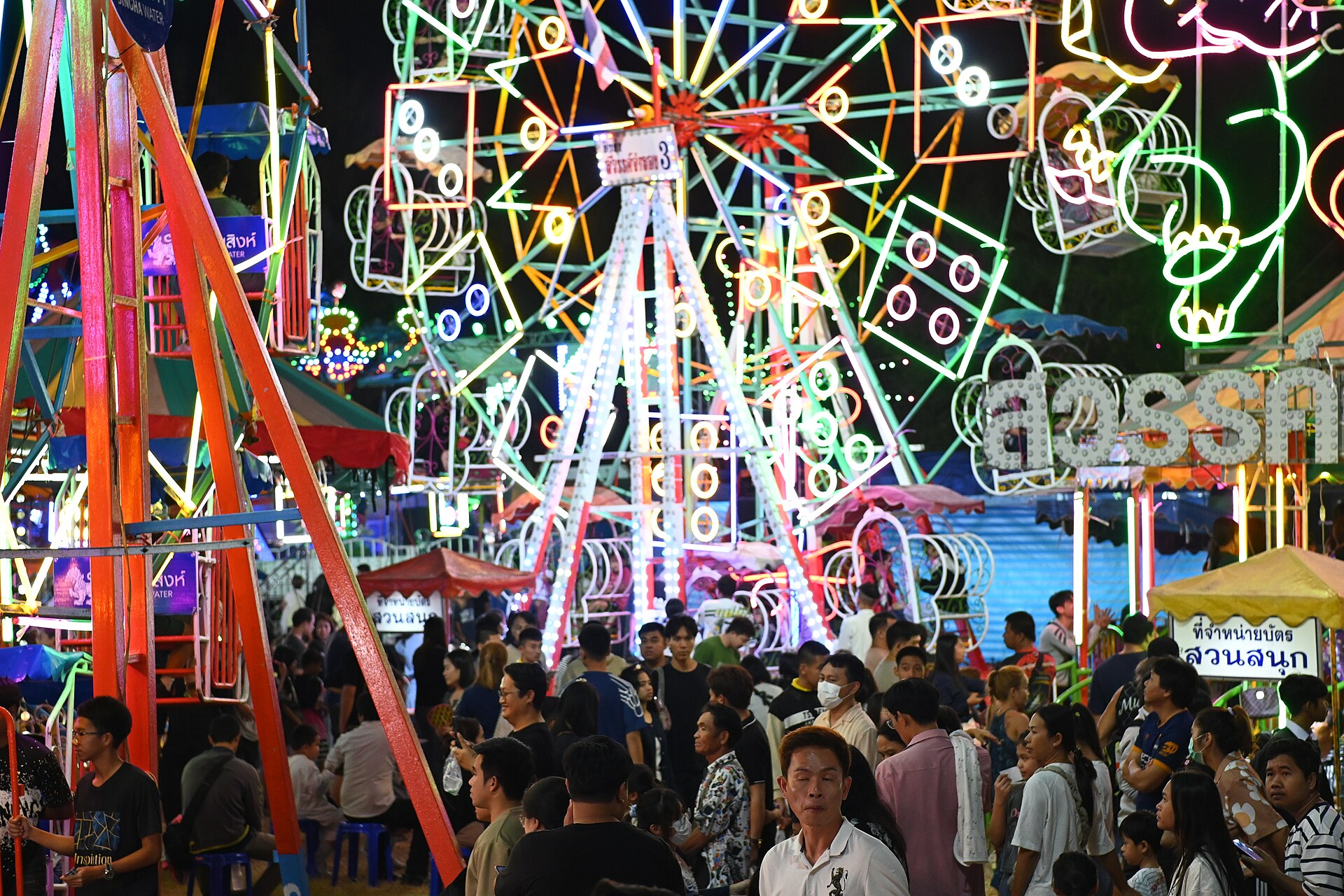
Not every freefall happens on a heritage bridge. Some happen under stage lights, next to food trucks, with a DJ counting you down. Festival and carnival bungee moments - and their reverse-bungee cousins - turn elastic thrills into temporary public theatre.[1][4]
Why events love elastic spectacles
Crowds want visible courage. Organizers want a skyline attraction that photographs well. Mobile cranes, portable towers, and catapult-style reverse systems can arrive with a festival build and leave with the teardown, bringing bungee energy to cities without canyons.[1][4]
Commercial pioneers helped normalize paid freefall as entertainment; events simply change the soundtrack and the queue culture.[2]
What changes at a carnival site
Wind limits still rule, but so do show schedules, noise, and spectator density. Briefings can feel shorter in the crush; that is a reason to listen harder, not less. Ground exclusion zones matter more when thousands of people treat the jump as backdrop for selfies.[3]
Alcohol is often nearby. Professional operators refuse intoxicated jumpers for good reason - festival FOMO is not a medical clearance.
How to be a smart festival jumper
- Inspect the vibe: bored staff, messy gear storage, and unclear barriers are red flags
- Ask who certifies the crane or tower and how weather aborts work
- Prefer daylight slots over midnight “hold my drink” energy
- Leave valuables in a locker or with a sober friend outside the exclusion zone
- Accept that event media may be upsold hard - decide before the harness
Culture on both sides of the barrier
For spectators, festival freefall is participatory even if you never leave the ground: cheers, collective gasps, phone walls. For jumpers, the social pressure can be stronger than on a quiet morning bridge. Choose crews that coach rather than bait the crowd against you.[3]
Not all elastic is the same sport
Classic bungee, reverse catapults, and trampoline bungee attractions share marketing language and diverge in physics. Read the product name. Know what you bought.[4][1]
Festival bungee done well is joy with temporary steel and permanent standards. Done poorly, it is a loud shortcut. Your ticket should buy the first story, never the second.[2][3]
If you are traveling specifically for an event jump, still build a weather and mechanical delay buffer - pop-up ops cancel too. Celebrate afterward away from the mosh energy if you feel shaky; adrenaline plus crowds can overwhelm. A quiet walk outside the grounds is a perfectly respectable post-carnival ritual.
Sources
- Wikipedia - Bungee jumping (2026)
- AJ Hackett - commercial bungy culture and events heritage (2026)
- XINSURANCE - temporary setups still need rigorous safety (2023)
- Wikipedia - Reverse bungee (2026)
Image credits
- Photo: PattayaPatrol / Wikimedia Commons (CC BY-SA 4.0)
- Photo: PattayaPatrol / Wikimedia Commons (CC BY-SA 4.0)