If you want to practice courage before a first freefall, two modern products keep showing up on the same shortlist: indoor skydiving and bungee jumping. Both sell controlled intensity. Both have professional briefing cultures. Both leave first-timers grinning, shaky, and oddly proud. They are not interchangeable, though - and treating them as twins is the fastest way to pick the wrong training ground for the fear you actually need to face.[1][2]
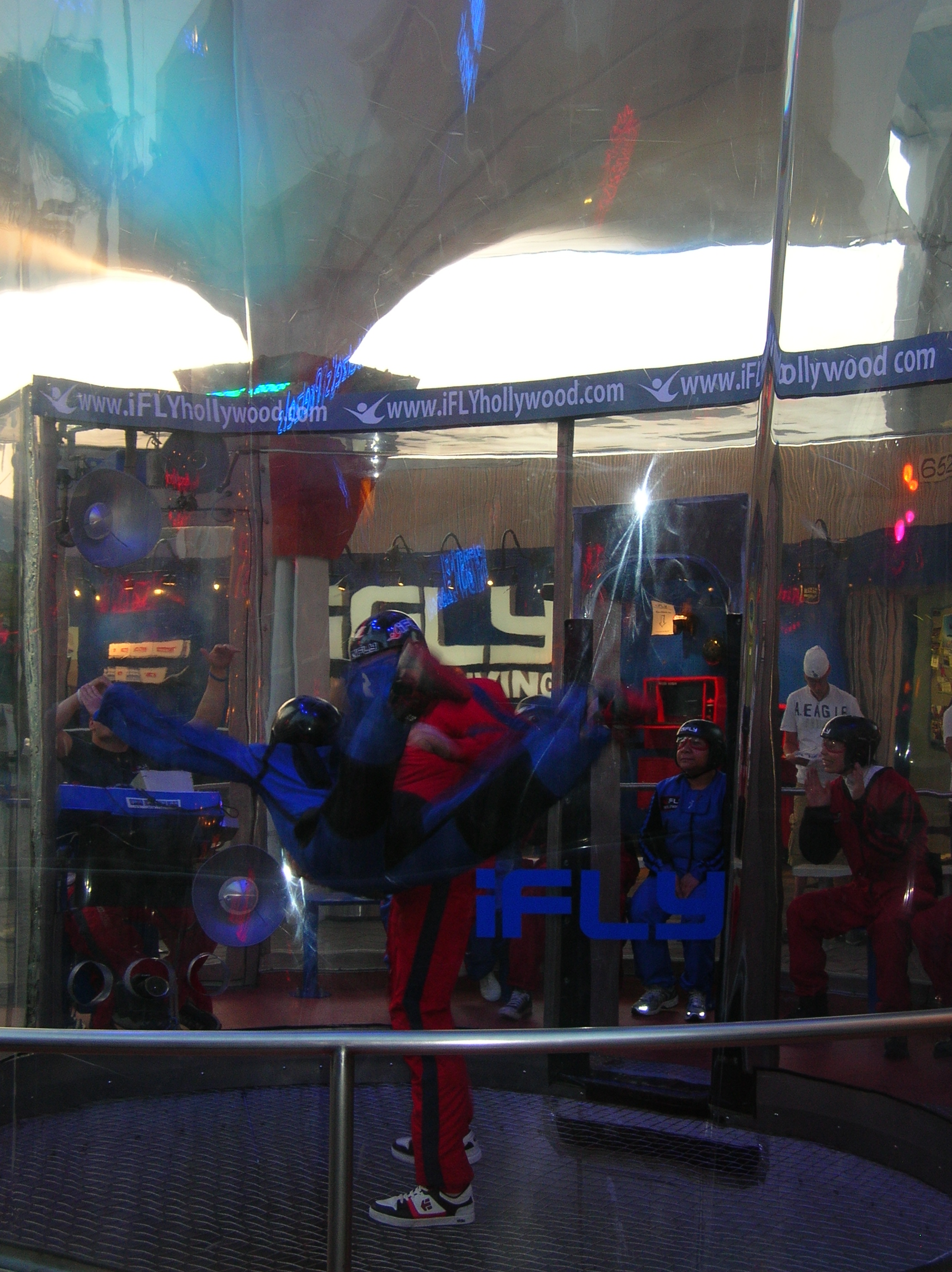
Indoor skydiving puts you in a vertical wind tunnel where a column of air holds your body in flight. You learn hand signals, body position, and how to trust an instructor who is close enough to correct you mid-hover. Bungee puts you on a platform with a cord matched to your weight, then asks for a single committed step into empty air. One is a skill session. The other is a decision session.[1][2]
What each sport trains in your nervous system
Indoor skydiving trains sensory novelty under continuous coaching. The wind is loud, the goggles fog, your limbs feel wrong for a few flights, and then they start to make sense. Fear softens as competence rises. That pattern is gold for people whose anxiety spikes when they feel unskilled. The tunnel also lets you stop, debrief, and fly again in the same hour - a feedback loop bungee cannot match.[1][3]
Bungee trains commitment under time pressure. The freefall is brief; the psychological load lives in the walk to the edge, the harness checks, and the countdown. You do not “practice flight technique” so much as practice acting while afraid. For many people, that is exactly the muscle they want before a bigger outdoor goal. Reputable sites make the process transparent - weighing, medical honesty, dual checks - so the fear has structure instead of chaos.[2][4]
Cost, access, and how “gateway” really works
Indoor tunnels are often city-adjacent, weatherproof, and bookable year-round. A first-timer package can be cheaper than a flagship bungee ticket, and you can return weekly. Bungee is usually a destination product: a bridge, a tower, a gorge, a travel day. The ticket buys a singular story more than a training plan. If your goal is gradual exposure to height and body flight, the tunnel wins on frequency. If your goal is to prove you can leave solid ground on purpose, bungee is the cleaner test.[1][2]
Skill transfer - honest version
Tunnel time will not teach you bungee cord stretch, rebound, or recovery boat etiquette. It will teach you to breathe under noise, to follow instructor cues, and to notice that your body can feel wild without being unsafe. That transfer is real and underrated. Bungee will not teach stable freefall body flight the way a tunnel or a skydive does. It will teach you a countdown ritual, harness trust, and the strange calm that often follows a completed leap.[3]
Neither activity is a medical clearance for the other. Heart conditions, recent injuries, pregnancy, and other exclusions still require real operator policy and, when needed, a clinician’s advice - not a successful tunnel flight or a short bridge jump.[2][4]
Which gateway should you book first?
Book indoor skydiving first if you hate feeling uncoordinated, if heights bother you less than loss of control, or if you want a repeatable practice loop before any outdoor leap. Book bungee first if your fear is specifically about edges, commitment, and “what if I freeze,” and you want a professional crew whose whole product is that exact moment.[2][3]
Many travelers do both in one trip: tunnel on day one for play, bungee on day three for story. That order is kind to the nervous system. It is also a reminder that adventure is not a single leaderboard. Courage can be trained in a glass tube of wind or on a timber deck above a river - as long as the people running the session treat your safety as craft, not content.[1][4]
Whichever you choose, arrive hydrated, honest on the medical form, and curious rather than performative. Fear that has a plan becomes excitement with better manners - and that is the real product both gateways sell.
Sources
- iFLY - What is indoor skydiving (2026)
- AJ Hackett Bungy New Zealand - Kawarau Bridge Bungy (2026)
- Medical News Today - Adrenaline and thrill-seeking (2021)
- XINSURANCE - Bungee jumping risks and safety tips (2023)
Image credits
- Photo: BrokenSphere / Wikimedia Commons (CC BY-SA 3.0)
- Photo: BrokenSphere / Wikimedia Commons (CC BY-SA 3.0)